
Do This Now
- 1 Decide who owns the sub. In trap and drill it is almost always the 808.
- 2 Pick a short kick and tune it to the root of the key so it does not wobble against the 808.
- 3 Sidechain the 808 to the kick: fast attack, 60-150 ms release, 3-6 dB of gain reduction.
- 4 Give the 808 the sub and the kick the click around 2-5 kHz. Keep the overlap small.
- 5 Check phase in mono. Flip polarity on the 808 and keep whichever version has more sub.
- 6 Saturate the 808 until its note is audible on a phone, then match the level to bypass.
Watch the technique in action, then read on for the details.
The kick and the 808 live in the same frequency space, and that is the whole problem. Stack them carelessly and they cancel each other out, leaving a low end that sounds huge on headphones and vanishes in a car. Work through these five fixes in order, because each one changes what the next needs.
Step 1: Decide Who Owns the Low End
Make this call before you touch a plugin.
In most trap and drill the 808 owns the sub, because it is the bass. That means your kick should punch in the upper range and give you attack rather than weight. Boom bap often flips this and gives the kick the bottom.
Choose a short, snappy kick. A long, subby kick fighting a subby 808 is the most common cause of muddy low end, and no amount of processing fixes a bad pairing.
- Trap and drill
- 808 owns the sub
- Boom bap
- Kick owns the low end
- Kick choice
- Short decay, clear click
- Long kick tail
- Shorten the decay in your sampler

Put the Kick and 808 in the Same Key
A boomy kick rings at a note too. When that note sits slightly off the 808's, the two drift in and out of phase and the low end wobbles on every hit.
Tune the 808 first with how to tune 808s. Then find the kick's note with a tuner or spectrum analyzer and pitch it to the root of the key or its fifth.
The friction is that the 808 moves between notes and the kick stays put. Tune the kick to the root, the note the 808 returns to most, and accept a small clash on passing notes. A short, clicky kick barely needs tuning.
Step 2: Sidechain the 808 to the Kick
Route the kick to duck the 808 for a split second on every hit.
This carves a tiny pocket so the kick transient punches through cleanly, then the 808 swells back in. Keep the release fast so the bass returns quickly and you do not lose energy.
Put a compressor on the 808 and feed its sidechain from the kick. In FL Studio use Fruity Limiter in Comp mode with the kick routed to the 808 as a sidechain. In Ableton use Compressor with Sidechain on and Audio From set to the kick.
- Ratio
- 4:1 to start
- Attack
- 0-5 ms
- Release
- 60-150 ms, back before the next kick
- Gain reduction
- 3-6 dB on each hit
- Trigger
- Kick track
The friction is that sub frequencies punish fast settings. One cycle of a 40 Hz note lasts 25 milliseconds, so an attack or release much shorter than that bends the waveform and can click. Lengthen the attack until the click goes, and if the pumping is obvious, pull the reduction back.
No compressor? Draw a short volume dip under each kick. The sidechain compression guide covers release times by tempo.
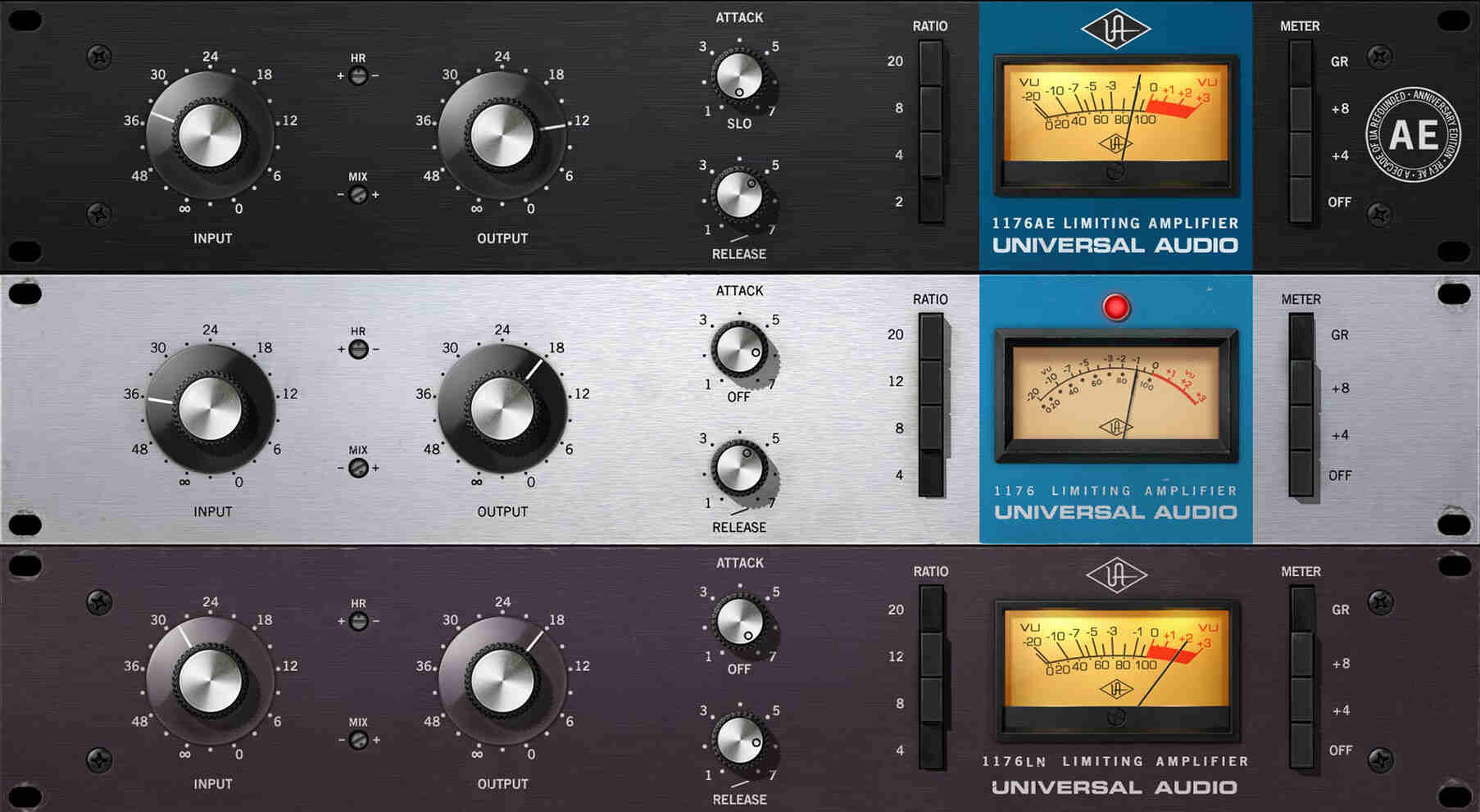
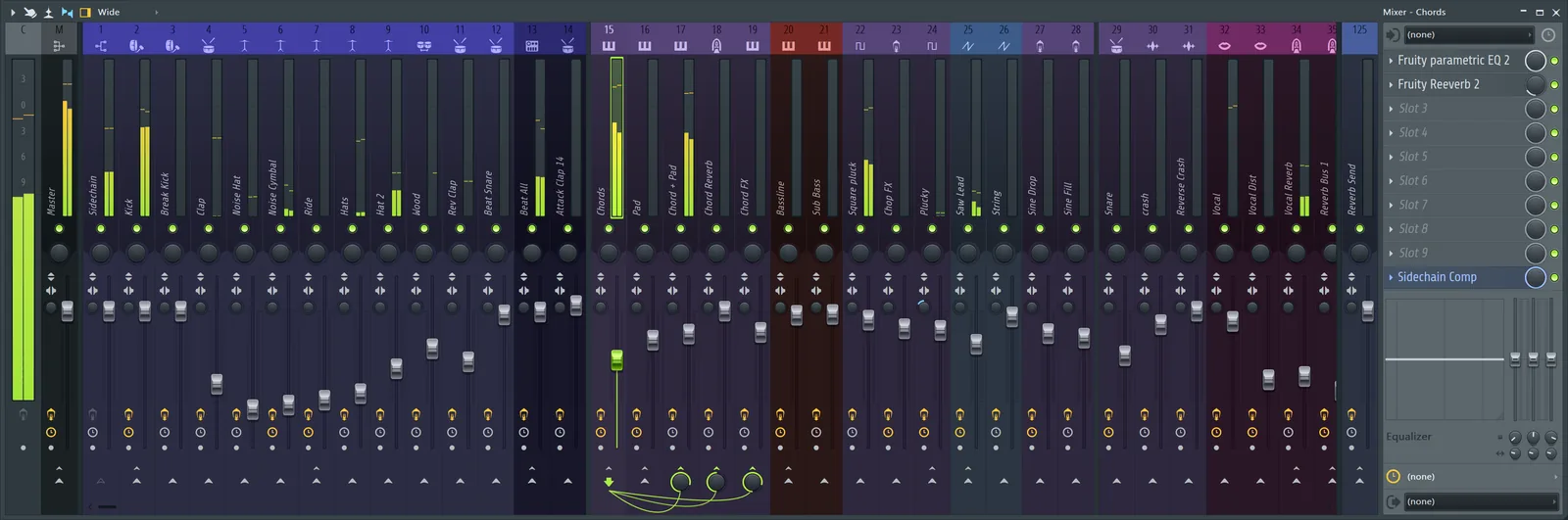
Kick and 808 need separate channels before either sidechain or EQ can treat them differently. Screenshot courtesy of Image-Line.
Step 3: Carve With EQ
Even with sidechaining the two still share frequencies, so give each a home.
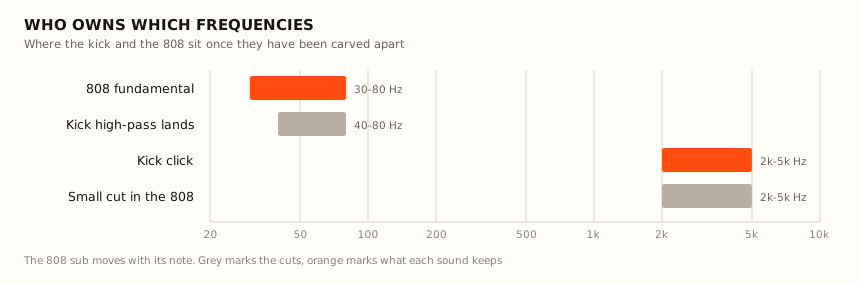
Let the 808 keep the deep sub. Roll the kick off below that range so it stops competing at the very bottom. Then let the kick keep its attack in the upper mids where the click lives, and trim that same region on the 808 if things feel cluttered.
The 808's note tells you where its sub sits. An F1 has its fundamental near 44 Hz and a C2 near 65 Hz, so start the kick's high-pass around 40 Hz and raise it until the 808's note comes through clearly.
- 808 sub
- Roughly 30-80 Hz, set by its note
- Kick high-pass
- Start near 40 Hz, often ends near 80 Hz
- Kick click
- Around 2-5 kHz
- 808 trim
- Small cut in the kick's click range
When you solo each element they should sound slightly incomplete. Together they form one full sound, which is exactly what you want.
The friction is that a static cut cannot follow a sliding 808. When the note moves, its fundamental moves with it, so a cut set for one note misses the next. EQ handles the frequency overlap and sidechaining handles the timing, as how to EQ a beat explains.
Step 4: Check the Phase
Two low-frequency sounds hitting at once can be out of phase, and that quietly steals your bass.
Trim any silence from the front of both samples. Then solo the pair, listen in mono, and flip the polarity on the 808. Keep whichever version has more sub.
In FL Studio that is the Invert phase icon on the mixer track. In Ableton use Utility with Phz-L and Phz-R both on, and in Logic the Gain plugin with both phase switches inverted.
- Listen in
- Mono, kick and 808 soloed
- Polarity
- Flip the 808, keep the fuller sub
- Timing
- Nudge the 808 1-2 ms at a time
- Confirm
- Full mix, still in mono
If flipping does not help, zoom into the waveforms. Both should push in the same direction at the hit, so nudge the 808 until they do. When they line up the sub gets fuller without you adding any gain.
The friction is that the fix can change with the note. A different 808 note has a different cycle length, so a pair that lines up on the root can partly cancel on the fifth. Check the notes the 808 plays most.
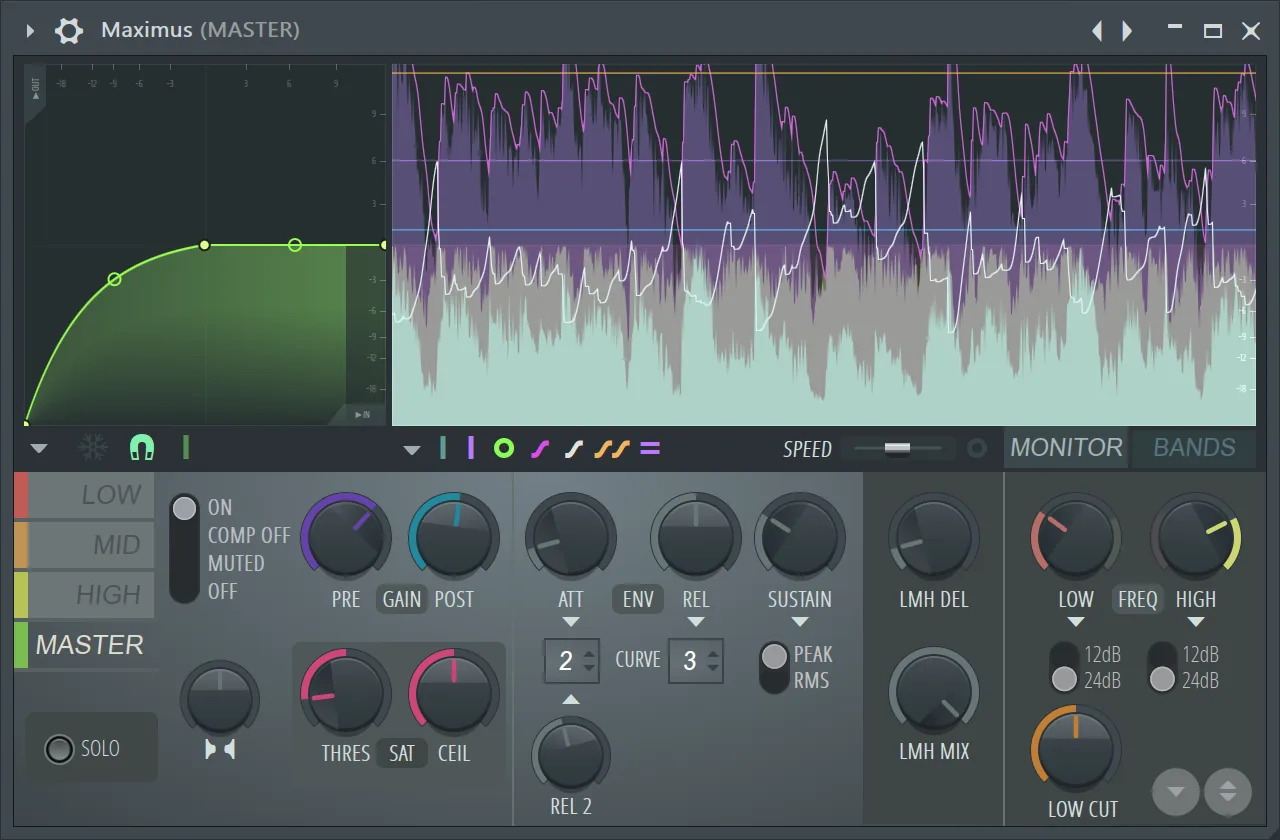
A multiband stage lets the sub keep its weight while the harmonics above it are pushed. Screenshot courtesy of Image-Line.
Step 5: Add Harmonics for Small Speakers
Sub frequencies simply do not exist on phones and laptops.
Add gentle distortion or saturation to the 808 so it generates harmonics further up. The ear fills in the missing fundamental, so listeners perceive bass even on tiny drivers.
Raise the drive from zero while the beat plays through your phone, and stop once the 808's note is clearly pitched. Then trim the output to match the bypassed level, because louder always wins a quick comparison.
- Drive
- Raise until the note is pitched on a phone
- Type
- Tube or tape for weight, clipping for bite
- Output
- Match the bypassed level
- Check
- Phone, laptop, then car
The friction is that the new harmonics land back in the kick's range. A 50 Hz note gains energy at 100 Hz and 150 Hz, right where a high-passed kick keeps its body, so recheck your step 3 EQ after adding drive. The saturation guide covers drive types.
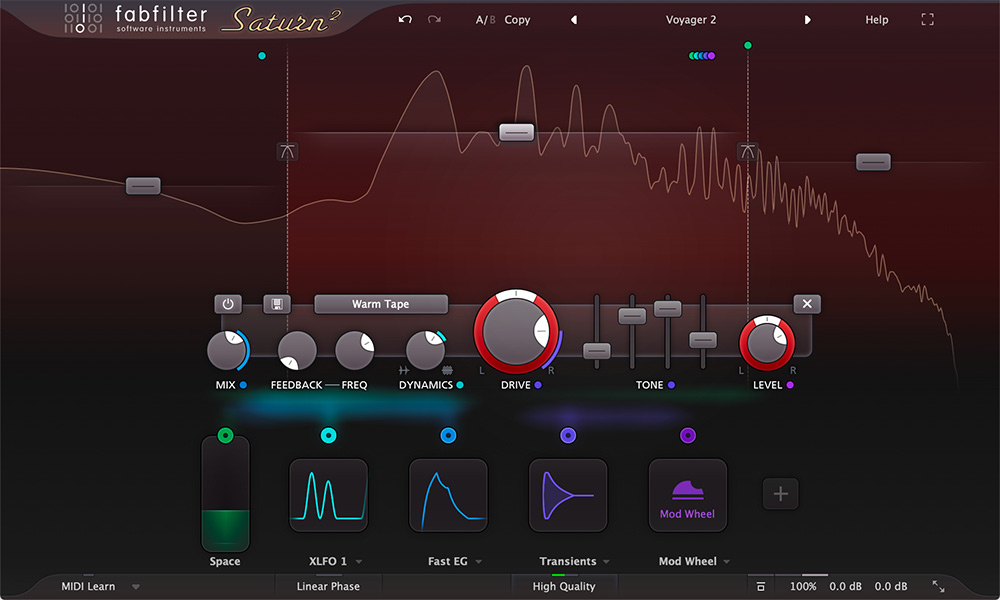
Layer it carefully so it does not turn harsh, then check on the worst speaker you own. If the low end reads clearly there, it holds up everywhere.
Frequently Asked Questions
Should the kick or the 808 have the low end?
In trap and drill the 808 owns the sub because it is the bass instrument. The kick should punch in the upper range with attack and click, and get rolled off underneath so it stops competing.
How much should I sidechain my 808 to the kick?
Start around 3 dB of gain reduction with a fast attack and a release that lets the 808 recover before the next kick, usually somewhere between 60 and 150 ms. If you can obviously hear the pumping, back the reduction off.
Why does my low end disappear when the kick and 808 play together?
They are probably out of phase and cancelling each other. Listen to the pair in mono, flip the polarity on the 808, and keep whichever version has more sub. If neither helps, nudge the 808 a millisecond or two at a time.
Should the kick and 808 be in the same key?
If the kick rings long enough to have an audible note, yes. Tune it to the root of the key, or the fifth, so it does not beat against the 808. A short, clicky kick barely needs tuning.
How do I make my 808 audible on phone speakers?
Add saturation or distortion so the 808 generates harmonics higher in the spectrum. Phones cannot reproduce sub frequencies at all, but the ear infers the missing fundamental from those harmonics.
Related Articles
Best 808 Sample Packs & Drum Kits for Beat Makers (2026)
808 drum kits and sample packs compared on tuning stability, sub weight, and slide behavior, with load notes for FL Studio, Ableton, and Logic.
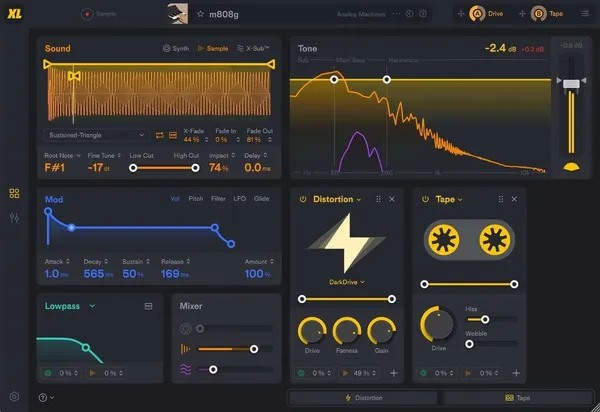
Best Drum Machine Plugins for Beat Makers (2026)
We tested the top drum machine and 808 plugins for punch, tuning control, and how fast they program a knocking beat without loading a single sample.
Best One-Shot Drum Kits for Programming (2026)
The best one-shot drum kits for programming, compared on transient quality, tuning consistency, and how cleanly the kicks, snares, and hats layer.

Marcus Vega
Marcus is a hip-hop producer and drum programmer based in Atlanta. He builds beats for independent rappers, licenses tracks through BeatStars, and has been in the top 500 producers on the platform for three years. He judges every sample pack by one question: does it help him finish a beat faster?