

Best Saturation Plugins for Beat Makers (2026)

A clean sine 808 has almost no harmonics, which is why it vanishes on a phone. Saturation is not a flavour you add at the end, it is often the only reason a low end survives at all.

We buy most of what we test. When you buy through a link on this page we may earn a commission, which never affects our picks or verdicts. How we work.

Louis Raveton
By Louis Raveton

Louis makes Downtempo, Electro-Dub, and beat-driven music under the names Flagada and Monsieur Shwill. He treats his sample drive like a record collection and has been obsessively hunting textures, breaks, and weird synth patches for over a decade. He also composes for Canal+ animation and LVMH installations, which means he has tested tools under real deadline pressure.

Saturation is the most misunderstood processor in a beat maker's chain. People treat it as a colour you sprinkle on at the end, when it is usually doing something far more structural: adding harmonic content above a fundamental so that small speakers have something to reproduce. A pure sine 808 at 45Hz is inaudible on a phone, and the only reason a commercial trap record still knocks through a phone speaker is that the low end has been driven hard enough to generate harmonics at 90Hz, 135Hz, and above.

We tested each of these on the same four sources. A clean sine 808 to measure how much apparent weight the plugin added on small speakers, a sampled drum break to judge how it handled transients, a bright hi-hat loop to see whether it turned harsh, and a full beat bus for glue. We judged the character of the harmonics it generated, how gracefully it behaved when pushed past sensible settings, and how much it quietly changed level and stereo image while you were listening to the tone.

Some of these are surgical multiband processors and some are one-knob character boxes, and the honest answer is that most producers need one of each. If your low end is the problem you are trying to fix, the bass plugin you are using matters as much as the saturation you put after it, and cutting before you drive will keep the result cleaner.

Pick one in 10 seconds

Short version
  • You want one saturation plugin that does every flavour Multiband, sixteen styles, deep modulation Saturn 2
  • You want aggressive analogue grit fast Five hardware models and a punish button Decapitator
  • You make lo-fi and want tape, noise, and wobble Six degradation modules in one plugin RC-20 Retro Color
  • You want genuine tape machine behaviour Models the transport, not just the saturation Satin
  • You want distortion you can shape per frequency band Two distortion stages with full band splitting Thermal

Compare all 7

Saturn 2
1. Saturn 2 FabFilter
8.6
Type
Multiband saturation and distortion
Character
Clean and configurable
Best on
Drum bus and 808s
Decapitator 7.8
Type
Analogue modelled saturation
Character
Aggressive and coloured
Best on
Breaks and vocals
Type
Multi-module degradation
Character
Vintage and degraded
Best on
Sampled loops and keys
Satin 7.8
Type
Tape machine emulation
Character
Subtle and authentic
Best on
Drum bus and full beat
Thermal 8.3
Type
Band-split distortion
Character
Modern and digital
Best on
Bass and synths
Type
Tape machine emulation
Character
Gentle and vintage
Best on
Sampled loops and drums
Was $149Now $30 View price
Type
Valve saturation
Character
Warm and weighty
Best on
Full beat bus
Was $125Now $30 View price
Read more →

Methodology

Who is this for

Beat makers, sample-based producers, and electronic musicians who need reliable sounds and tools for finishing tracks fast.

Our testing process

We test every pack and plugin in actual beat sessions, from programming drum patterns to full arrangement and mixdown. We evaluate how tools perform in a dense mix, not in solo.

Why you should trust us

We buy most reviewed plugins ourselves. Occasionally we receive NFRs for evaluation, but this never guarantees a review or positive verdict. We may earn commissions from links, but our editorial choices are never for sale.

Also considered

For every category, we audition the top 8 to 15 options, discarding any that fail our usability test or deliver a low inspiration rate in a real session.

Top Picks

01 FabFilter

Saturn 2

Best for Multiband Saturation

Multiband saturation with sixteen styles and serious modulation. The one plugin that replaces the rest of this list.

Tested score
8.6
out of 10

How it scored

  • Versatility 10.0

    Sixteen styles across up to six bands.

  • Band control 10.0

    Drive the low end without harming hi-hats.

  • Character 8.0

    Clean and accurate rather than distinctive.

  • Speed to result 6.5

    Slower to dial in than a one-knob box.

Why we picked it

Best for producers who want per-band control over saturation so they can drive a kick hard while leaving hi-hats clean, with sixteen character models in one plugin.

Who should skip it

Avoid if you want a fast one-knob character box, because the depth means dialling in a sound takes longer than reaching for a dedicated hardware emulation.

The good

  • Per-band drive keeps hi-hats clean
  • Sixteen genuinely different distortion styles
  • Per-band dynamics respond to level
  • Never turns ugly by accident

The bad

  • Slower to dial in than simple boxes
  • Modulation depth far exceeds most needs
  • Most expensive general-purpose option here
Type
Multiband saturation and distortion
Character
Clean and configurable
Best on
Drum bus and 808s
Format
VST / AU / AAX
Platform
macOS / Windows
License
Perpetual
Price
$149
Why it scored that way

Saturn 2 is the saturation plugin that removes the need for the other six. Multiband, deeply modulatable, and never accidentally ugly.

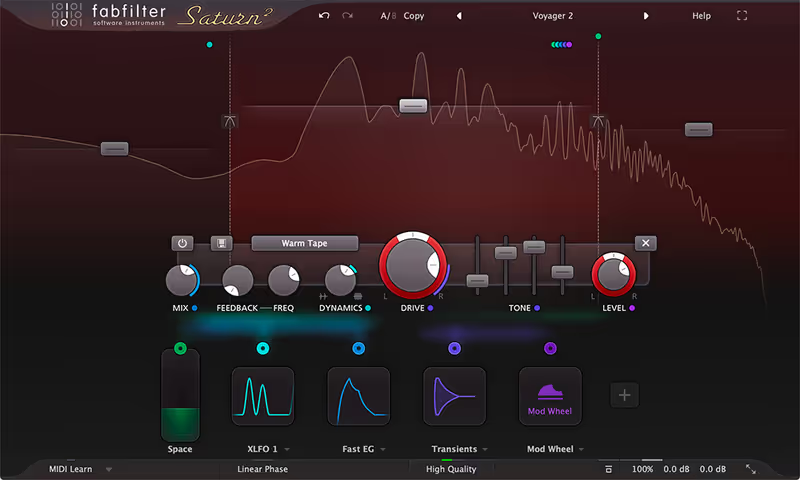
The multiband architecture is why this wins. On the sampled drum break I split at 200Hz and 4kHz, drove the low band hard for weight, left the mids alone, and added only a touch to the top so the cymbals gained air without turning harsh. Doing that with a single-band saturator means the whole break distorts together, and the hi-hats fall apart long before the kick gets heavy enough.

Sixteen distortion styles cover most of what the other plugins here specialise in, from clean tube warmth through tape to aggressive amp and fuzz models. On the sine 808 I used the warm tube style at moderate drive, and the note went from inaudible on a laptop speaker to clearly present, with the harmonics landing where I wanted rather than spraying across the spectrum. The per-band dynamics let the saturation respond to level, so quiet passages stay clean and loud ones get driven.

The friction is the depth. The modulation system is enormous, with envelope followers, LFOs, and XLFOs assignable to nearly any parameter, and that is genuinely more than most beat makers will ever need. It takes longer to dial in than a one-knob box, and there is a real temptation to build something complicated when a simple setting would have done. At one hundred and forty-nine dollars it is the most expensive general-purpose option here, and it is the one I would keep if I could keep only one.
Heard on
A standard multiband saturator in modern mixing Widely used for 808 and drum bus processing Referenced across FabFilter distortion tutorials
Check price — $149
02 Soundtoys

Decapitator

Best for Analogue Grit

Five hardware models, one drive knob, immediate results. The fast grit box, and no use on a full bus.

Tested score
7.8
out of 10

How it scored

  • Character 9.5

    Midrange bite that cuts through arrangements.

  • Speed to result 10.0

    One knob and a model choice, done.

  • Model variety 8.5

    Five styles that genuinely differ.

  • Band control 3.0

    None, so a full bus fries at high drive.

Why we picked it

Best for producers who want analogue grit and midrange bite on individual drums, breaks, and vocals without spending time configuring bands or modulation.

Who should skip it

Avoid if you need to drive a full mix bus, because there is no band splitting and pushing the low end also destroys the hi-hats.

The good

  • Instant analogue character with one knob
  • Five models that sound genuinely different
  • Excellent midrange bite on breaks

The bad

  • No multiband control at all
  • Unusable on a full mix bus at high drive
  • Level jumps a lot as drive increases
Type
Analogue modelled saturation
Character
Aggressive and coloured
Best on
Breaks and vocals
Format
VST / AU / AAX
Platform
macOS / Windows
License
Perpetual
Price
$199
Why it scored that way

Decapitator has five models and a punish button. It is the fastest route to analogue grit on this list.

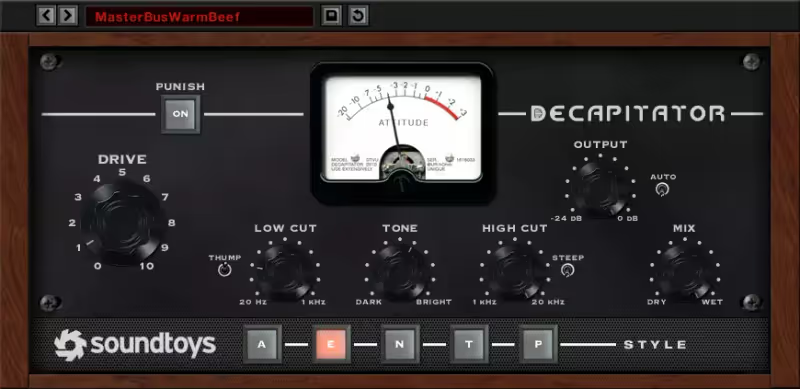
The appeal is immediacy. Five styles labelled A through E, each modelling a different piece of hardware, a drive knob, and a tone control. I put style E on the sampled drum break, pushed drive to about two thirds, and the break went from flat to aggressive in one move, with a midrange bite that made it cut through a busy arrangement. No band splitting, no modulation, just a sound that arrived quickly.

The models genuinely differ. Style A is a clean tube warmth suited to gluing a bus, style E is a much more aggressive transistor character that suits breaks and vocals that need attitude, and the ones in between cover the ground. On the sine 808 the warmer models added weight without much change in character, which is often exactly what you want on a sub. The punish switch is a deliberate joke that turns out to be useful, slamming the input for parallel-blended destruction.

The friction is the lack of control. There is no multiband option, so on a full beat bus driving the low end hard also fries the hi-hats, and the fix is to put it on individual elements rather than the mix. It is also easy to make things worse quickly, because the drive knob has a lot of range and the plugin gets loud as you turn it. At sixty-nine dollars it is fairly priced for what it is, and it is the plugin I reach for when I know the sound I want and do not want to build it.

Heard on
A studio standard for adding attitude to drums Widely used on breaks and rap vocals Referenced constantly in Soundtoys demonstrations
Check price — $199
03 XLN Audio

RC-20 Retro Color

Best for Lo-Fi Character

Six degradation modules and one intensity knob. The lo-fi character plugin, and wrong for clean modern low end.

Tested score
8.1
out of 10

How it scored

  • Lo-fi character 10.0

    Wobble and noise sell the vintage illusion.

  • Speed to result 9.5

    Magnitude knob scales everything at once.

  • Module range 9.0

    Six genuinely distinct degradation types.

  • Clean weight 4.0

    Cannot add transparent 808 weight.

Why we picked it

Best for lo-fi and sample-based producers who want tape hiss, vinyl crackle, pitch wobble, and saturation from one plugin with a single intensity control.

Who should skip it

Avoid if you want clean transparent weight on an 808 or a modern polished sound, because every module here moves toward degradation.

The good

  • Wobble module sells the vintage illusion convincingly
  • Real vinyl and tape noise sources included
  • Magnitude control scales six modules at once
  • Replaces several separate lo-fi processors

The bad

  • Not a clean or transparent processor
  • Very easy to overdo with one gesture
  • Wrong tool for modern polished trap
Type
Multi-module degradation
Character
Vintage and degraded
Best on
Sampled loops and keys
Format
VST / AU / AAX
Platform
macOS / Windows
License
Perpetual
Price
$99
Why it scored that way

RC-20 is six kinds of damage in one window, and it is the reason a lot of lo-fi beats sound the way they do.

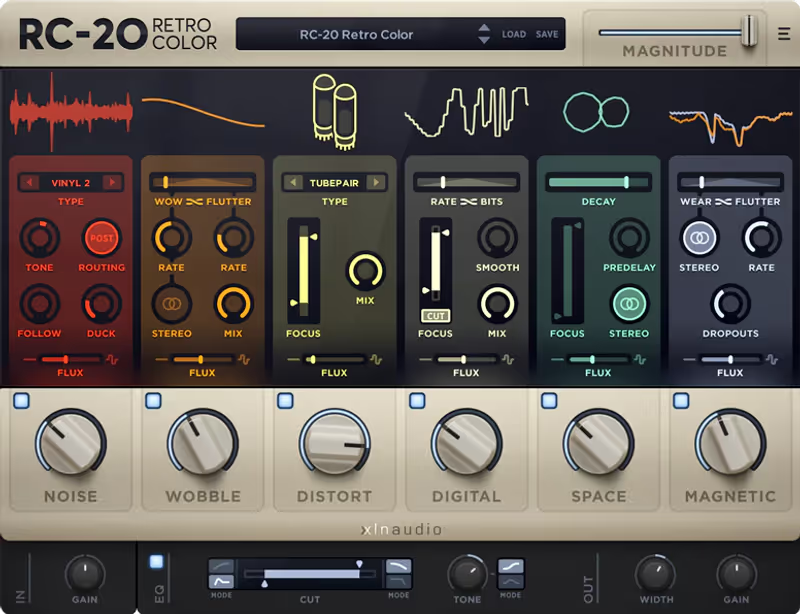
Saturation is only one of six modules here, and that is the point. Noise adds vinyl crackle or tape hiss, wobble introduces pitch instability, distort provides the saturation, digital reduces bit depth and sample rate, space adds ambience, and magnitude scales all of them at once. On the sampled drum break I turned magnitude to about thirty percent with all modules active and the break immediately sounded like it came off a worn record rather than a clean sample library.

The wobble module is the one that matters most for lo-fi. Real tape and vinyl introduce small pitch variations, and that instability is a large part of why old recordings sound the way they do. Adding a slow wobble to a piano loop took it from obviously digital to convincingly dusty in one control, which is a result that saturation alone cannot produce. The noise module having selectable sources, including actual vinyl and tape recordings, saves loading a separate texture layer.

The friction is that it is a character plugin rather than a mix tool. It will not give you clean transparent weight on an 808 the way Saturn or Decapitator can, because everything it does is in the direction of degradation. Used on a whole beat it can quickly become a wash of noise, and the magnitude control makes it very easy to go too far in one gesture. At ninety-nine dollars it is close to essential for lo-fi producers and largely irrelevant for anyone chasing a clean modern trap sound.

Heard on
A defining plugin in modern lo-fi hip-hop production Widely used for vinyl and tape emulation on loops Referenced across XLN Audio lo-fi tutorials
Check price — $99
04 u-he

Satin

Best for Tape Glue

A full tape transport model, not just tape saturation. Subtle, technical, and the best glue here.

Tested score
7.8
out of 10

How it scored

  • Authenticity 10.0

    Models transport, head bump, and bias.

  • Bus glue 9.5

    Rounds transients and loosens rigid programming.

  • Obvious character 6.0

    Subtle next to a grit box like Decapitator.

  • Learning curve 5.5

    Parameters assume tape machine knowledge.

Why we picked it

Best for producers who want authentic tape machine behaviour including head bump, wow and flutter, and speed-dependent response for glue on a drum or beat bus.

Who should skip it

Avoid if you want obvious dramatic grit or a fast result, because the effect is subtle and the parameters assume you know how tape machines work.

The good

  • Models the transport, not just the saturation
  • Head bump adds low weight EQ cannot replicate
  • Excellent transient rounding for bus glue

The bad

  • Subtle rather than dramatic
  • Dense parameters need real tape knowledge
  • Moderate to high CPU cost
Type
Tape machine emulation
Character
Subtle and authentic
Best on
Drum bus and full beat
Format
VST / AU / AAX
Platform
macOS / Windows
License
Perpetual
Price
$129
Why it scored that way

Satin models the whole tape machine rather than just the saturation, which is why it behaves differently from every other plugin here.

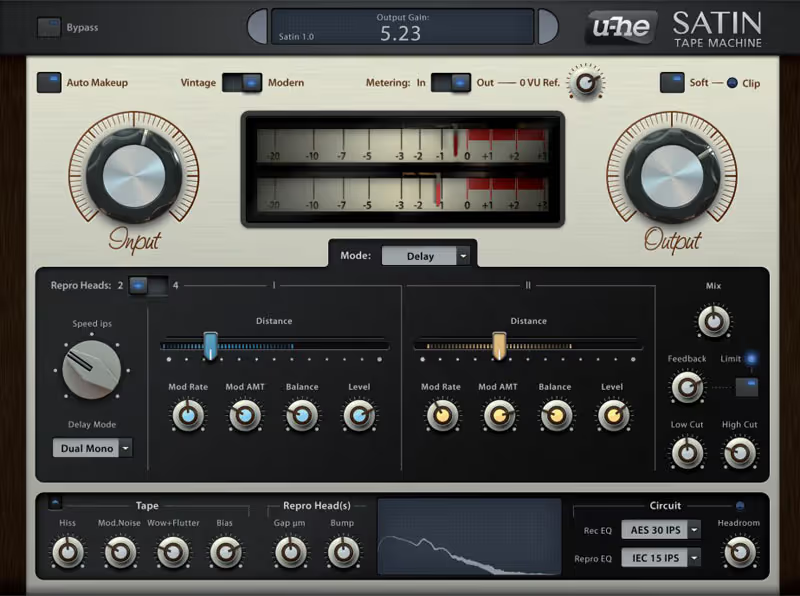
Most tape plugins model the harmonic distortion of tape and stop there. Satin models the transport, so tape speed changes the frequency response, the head bump adds a low-frequency lift around 50Hz that varies with speed, and wow and flutter introduce pitch movement tied to a virtual capstan. On the full beat bus at 15 inches per second the head bump added weight in the low end that no EQ move quite replicates, because it is a resonance rather than a shelf.

The detail rewards knowing what tape actually does. Adjusting bias changes how the high frequencies compress, running the machine hotter softens transients in a way that glues a drum bus, and the noise reduction emulations change the character audibly. On the sampled drum break, driving it moderately rounded the transients and made a programmed pattern feel less rigid, which is the specific thing people mean when they say tape adds glue.

The friction is that it is subtle and technical. Compared with Decapitator it does almost nothing dramatic, and a producer looking for obvious grit will be disappointed. The interface is dense with parameters that mean nothing unless you understand tape machines, so getting the best from it involves reading. CPU is moderate to high because the modelling is thorough. At one hundred and twenty-nine dollars it is a specialist for people who want authentic tape behaviour rather than the idea of it.

Heard on
Used for authentic tape glue on drum busses Popular with engineers who worked on real tape Referenced in u-he tape emulation documentation
Check price — $129
05 Output

Thermal

Best for Band Distortion

Band-split distortion with a morph knob between two full states. Modern and flexible, not warm.

Tested score
8.3
out of 10

How it scored

  • Band control 9.5

    Distort above the fundamental and leave sub clean.

  • Morph automation 9.5

    Smooth crossfade between two complete states.

  • Character 7.5

    Modern and digital rather than analogue.

  • Interface clarity 6.5

    Attractive but low on information density.

Why we picked it

Best for producers who want to distort specific frequency bands independently and automate a morph between two complete distortion states in one gesture.

Who should skip it

Avoid if you want vintage analogue warmth, because the algorithms lean modern and digital rather than modelling classic hardware circuits.

The good

  • Distort harmonics while leaving the sub clean
  • Morph between two full states in one knob
  • Modular chain with filters and compression

The bad

  • No analogue warmth in the algorithms
  • Interface favours looks over density
  • Overkill for simple saturation tasks
Type
Band-split distortion
Character
Modern and digital
Best on
Bass and synths
Format
VST / AU / AAX
Platform
macOS / Windows
License
Perpetual
Price
$149
Why it scored that way

Thermal splits your sound into bands and lets you distort each one differently, then morph between two entire setups.

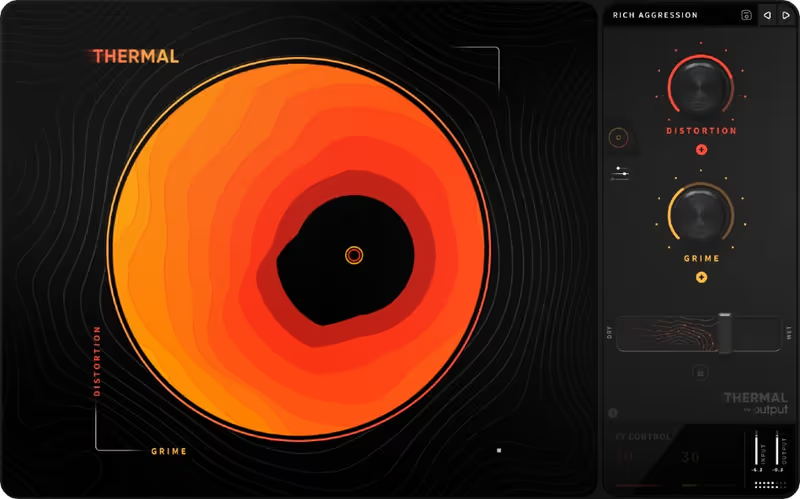
The band splitting is the core feature. You divide the signal into up to three bands, then run two independent distortion stages with filters, compression, and modulation between them, with full control over what happens in each band. On the sine 808 I distorted only the range above 120Hz and left the fundamental untouched, which added the harmonics needed for phone-speaker translation without changing the sub at all. That is a genuinely different result from driving the whole signal.

The morph control is the fun part. You save two complete states and crossfade between them with one knob or an automation lane, so a bass can move from clean in the verse to fully destroyed in the drop as a single automated gesture. On the beat bus I set a subtle state and a violent one and rode between them, and the transition was smooth rather than stepped, which is hard to achieve with separate plugin instances.

The friction is that the interface, while attractive, prioritises visual design over information density, so finding a specific parameter takes longer than in a plainer plugin. The distortion algorithms are good but lean modern and digital, so it does not have the analogue warmth of Decapitator or Satin. At around seventy-five dollars it is well priced for the flexibility, and it suits producers making bass-heavy electronic music more than those chasing vintage tone.

Heard on
Popular for bass distortion in electronic production Used for automated clean-to-destroyed transitions Referenced in Output sound design demonstrations
Check price — $149
06 Waves

Abbey Road J37 Tape

Best for Vintage Tape

The gentlest, most specific tape warmth here. Makes new samples sound found, at a Waves-shaped price.

Tested score
7.5
out of 10

How it scored

  • Warmth 9.5

    Soft compression and gentle high roll-off.

  • Period accuracy 9.5

    Three era-correct tape formulas.

  • Aggression 5.0

    The gentlest saturation on this list.

  • Value 6.0

    Expensive for a single-purpose emulation.

Why we picked it

Best for sample-based producers who want gentle period-accurate tape warmth that makes new material sound found rather than freshly programmed.

Who should skip it

Avoid if you want aggressive saturation or would rather not deal with the Waves installer and licence manager for one plugin.

The good

  • Genuinely warm period-accurate character
  • Three tape formulas with real differences
  • Built-in tape delay is a useful extra

The bad

  • Too gentle when you want attitude
  • Waves installer and licensing overhead
  • Expensive against Satin's deeper modelling
Type
Tape machine emulation
Character
Gentle and vintage
Best on
Sampled loops and drums
Format
VST / AU / AAX
Platform
macOS / Windows
License
Perpetual
Price
$30 (was $149)
Why it scored that way

The J37 models one specific machine from one specific studio, and it has a warmth that generic tape plugins do not reach.

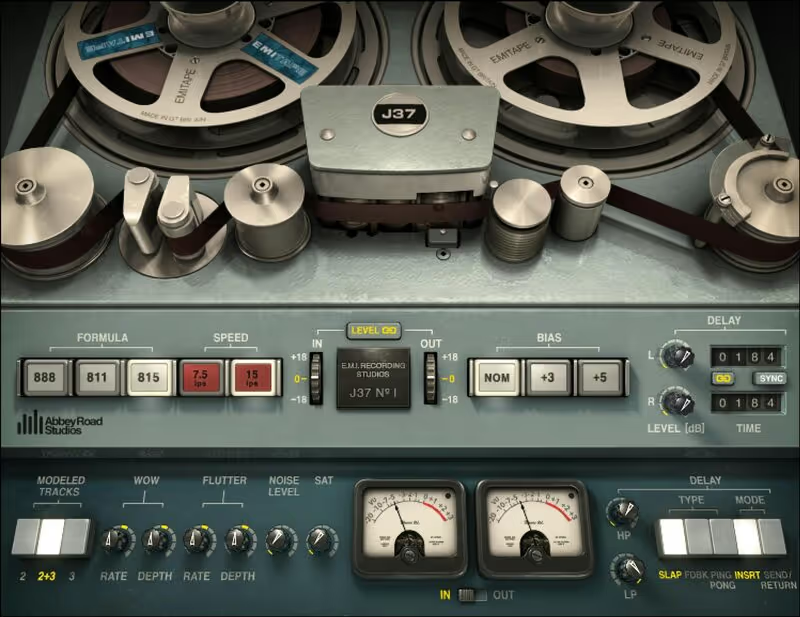
Specificity is the selling point. Rather than modelling tape in general, Waves modelled the actual EMI J37 used on records made at Abbey Road, including three period tape formulas that each behave differently. On the sampled drum break the 1960s formula at 15 inches per second added a soft, slightly compressed warmth to the transients and a gentle high-frequency roll-off that made a modern sample sit convincingly in an older-sounding arrangement.

The saturation itself is the gentlest on this list, and that is a feature rather than a shortcoming. Where Decapitator adds attitude, the J37 adds a sense that the recording passed through something physical, which suits sample-based hip-hop where the goal is often to make new material sound found rather than made. The bias and wow and flutter controls let you push into more obviously degraded territory when you want it, and the built-in tape delay is a genuine bonus.

The friction is the Waves ecosystem. The installer, licence manager, and account requirement are more involved than a straightforward download, and the plugin follows the older Waves interface conventions with small controls. It is also expensive at one hundred and forty-nine dollars for a single-purpose tape emulation, particularly when Satin models more of the machine for less money. It survives on character, and if you want the specific Abbey Road warmth then nothing else provides it.

Heard on
Modelled on the machine used at Abbey Road Studios Used for period-accurate warmth on sampled material Referenced in Waves vintage processing demos
Check price — $30
07 Plugin Alliance

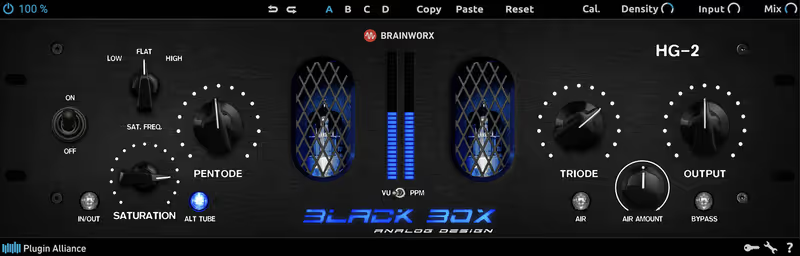
Black Box Analog Design HG-2

Best for Bus Weight

Two blendable valve paths and a parallel air band. The bus thickener, and remarkable value at the price.

Tested score
8.6
out of 10

How it scored

  • Bus thickening 9.5

    Adds weight with no obvious distortion.

  • Air band 9.5

    Brightness from harmonics, not an EQ lift.

  • Value 9.5

    Twenty-six dollars for a serious bus tool.

  • Solo element use 6.0

    Less useful on isolated 808s and drums.

Why we picked it

Best for producers who want valve-style weight and harmonic brightness on a full beat bus, with two blendable tube paths and parallel air band saturation.

Who should skip it

Avoid if you mainly process individual drums or 808s, because it is voiced for full-range bus material and does less on isolated low-frequency sources.

The good

  • Two tube paths blend for precise character
  • Parallel air band beats an EQ high boost
  • Outstanding value at the usual sale price

The bad

  • Voiced for busses, weaker on solo elements
  • Small hardware-style controls
  • Minimal metering
Type
Valve saturation
Character
Warm and weighty
Best on
Full beat bus
Format
VST / AU / AAX
Platform
macOS / Windows
License
Perpetual
Price
$30 (was $125)
Why it scored that way

The HG-2 is a valve box with two tube paths you can blend, and it makes a beat bus sound expensive.

This models a piece of outboard built specifically for adding weight to a mix bus, and the two-path design is what makes it useful. A pentode path adds firmer, more aggressive harmonics, a triode path adds softer, rounder ones, and you blend between them while a separate saturation control drives the whole thing. On the full beat bus a small amount of triode with a touch of pentode thickened the mix without any obvious distortion, which is the specific effect people describe as analogue glue.

The air band is the other reason to own it. It applies parallel saturation to a selectable high band, so you can add brightness that comes from harmonics rather than an EQ boost. On the bright hi-hat loop, an EQ lift made it harsh while the air band made it present, and that difference is audible immediately. It is a subtle plugin used correctly and a very heavy one when pushed.

The friction is that it is a bus processor pretending to be versatile. On individual elements it is less interesting than a dedicated character box, and on a sine 808 it added less usable weight than Saturn or Decapitator because it is voiced for full-range material. The interface is a faithful reproduction of a hardware front panel, which means small controls and no metering beyond a basic level indicator. At twenty-six dollars through Plugin Alliance it is remarkable value, and it goes on sale often enough that paying more would be careless.

Heard on
Modelled on hardware used for mix bus processing Popular for adding weight to finished beat busses Referenced in Plugin Alliance saturation comparisons
Check price — $30

What didn’t make the list

3 cut
  • Radiator Soundtoys

    A lovely warm tube preamp emulation with a genuinely nice midrange, but it overlaps with Decapitator from the same developer and Decapitator has far more range.

  • Magnetite Black Rooster Audio

    Good tape saturation at nineteen dollars and a fair budget entry, but Satin and the J37 both model the transport in ways this one does not attempt.

  • MSaturatorMB MeldaProduction

    Capable multiband saturation for very little money, but the interface makes it slow to dial in next to Saturn 2, which does the same job far more quickly.

Frequently Asked Questions

What is the difference between saturation and distortion?

They are the same process at different intensities. Saturation adds harmonics gently and keeps the source recognisable, while distortion pushes far enough that the harmonics dominate the original tone. Most plugins here do both, and the control you turn is simply how far you go.

Where should saturation go in my chain?

After EQ that cuts and before EQ that boosts, because driving a resonance you have not removed makes it worse. On a bus, put it before the compressor if you want the compressor reacting to the harmonics, and after it if you want the saturation gluing an already-controlled signal.

How much saturation should I put on an 808?

Enough that the note is clearly audible on a laptop speaker, and no more. Check by soloing the beat on the worst speaker you own rather than by looking at the meter. Most producers under-drive on headphones and over-drive when they finally check on a phone.

Does saturation make things louder?

Yes, and that is the trap. Added harmonics raise perceived loudness, and louder almost always sounds better in an A and B comparison. Use the output trim to match levels before deciding whether the saturation actually improved anything.

Written By

Louis Raveton

Louis makes Downtempo, Electro-Dub, and beat-driven music under the names Flagada and Monsieur Shwill. He treats his sample drive like a record collection and has been obsessively hunting textures, breaks, and weird synth patches for over a decade. He also composes for Canal+ animation and LVMH installations, which means he has tested tools under real deadline pressure.