House & Techno
•
By Kai Tanaka
Best Dubstep Sample Packs & Presets (2026)
We tested the top dubstep sample packs and Massive preset banks for growl movement, sub weight, drop impact, and how much editing they need.
Read Review →
House and techno are built on repetition. The groove has to be immaculate.
A weak kick kills a house track. A thin bassline empties a dancefloor. We test packs by importing them into Ableton and running them at sustained volumes through a reference mix chain. If it does not hold up after 4 bars of looping, it does not make the list.
House and techno are built on repetition. The groove has to be immaculate.
A weak kick kills a house track. A thin bassline empties a dancefloor. We test packs by importing them into Ableton and running them at sustained volumes through a reference mix chain. If it does not hold up after 4 bars of looping, it does not make the list.
We tested the top dubstep sample packs and Massive preset banks for growl movement, sub weight, drop impact, and how much editing they need.
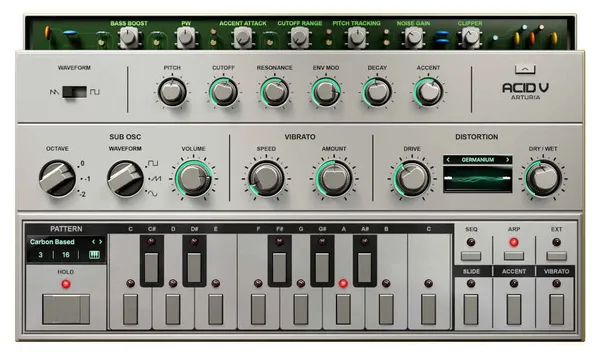
We tested the top acid synths, TB-303 emulations, and acid loop packs for filter resonance quality, squelch character, and how musically the 303 lines actually sit.

We tested the top EDM sample packs and preset banks for drop energy, kick punch, and how festival-ready the drums, leads, and FX actually are on a big system.
We tested the top techno and tech house sample packs for kick weight, percussion drive, and how relentlessly the loops push a track forward on a system.
We tested the top house and deep house sample packs for kick weight, chord stab character, and bassline movement in real club-ready sessions.
A tight transient with controlled sustain. It should punch through a mix at any volume. Avoid kicks that are over-compressed at source because you cannot undo that in the mix.
Deep house packs lean toward organic textures, jazzy chords, and sub bass. Tech house packs focus on punchy minimal loops, groove-heavy percussion, and driving basslines. Most producers need both.
Yes. Wavetable synths handle acid bass, plucked chord stabs, and lead lines well. For classic analog warmth, look for packs built on Diva, Repro-1, or actual hardware recordings.
House sits 120-130 BPM. Tech house runs 128-135 BPM. Techno ranges 130-145 BPM. Ensure your sample pack specifies the native BPM so time-stretching stays minimal.