

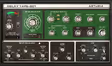



Thirty delay machines and a groove engine. The studio default, and most people use a fraction of it.
How it scored
- Character range 10.0
Thirty models that genuinely differ.
- Groove engine 9.5
Repeats can swing independently of the grid.
- Repeat quality 9.0
Tape models darken naturally as they decay.
- Interface clarity 6.5
Real depth hidden behind a details page.
Why we picked it
Best for producers who want thirty distinct delay characters in one plugin, plus a groove engine that lets repeats swing independently of the DAW grid.
Who should skip it
Avoid if you want everything visible at once, because most of the real control sits behind a details page that is easy to never open.
The good
- Thirty models cover every classic character
- Groove engine adds human feel to repeats
- Tape models darken repeats naturally
- Saturation and diffusion built in
The bad
- Most controls hidden behind a details page
- Involved installer and authorisation
- Easy to use on defaults for years
- Type
- Multi-model delay
- Character
- Varies by model
- Best on
- Vocals and melodies
- Format
- VST / AU / AAX
- Platform
- macOS / Windows
- License
- Perpetual
- Price
- $199
Why it scored that way
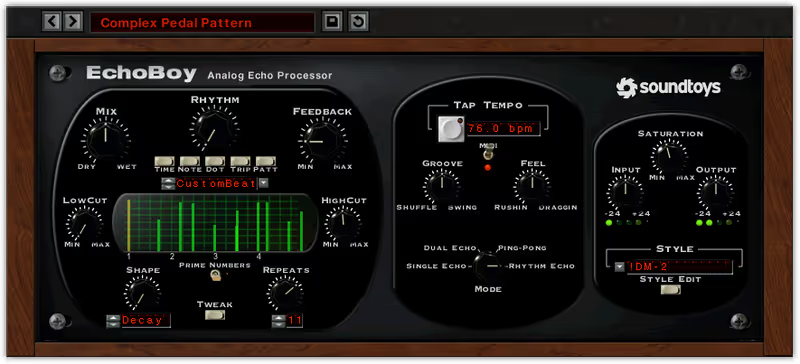
EchoBoy contains thirty delay machines and a groove engine, and it has been the studio default for over a decade for good reason.
The machine models are the reason to buy it. Each one applies a different filtering, saturation, and modulation profile to the repeats, so switching from the clean digital style to a tape or an old transistor model changes the entire character without touching another control. On the rap vocal I used a tape model for the throws and the repeats darkened progressively as they decayed, which kept them out of the way of the next line in a way a clean digital repeat does not.
The groove section is the feature nobody talks about and everybody should. It lets you apply a swing feel to the repeats independently of the DAW grid, so a delay on a straight snare can land slightly behind the beat and add a human push to a rigid pattern. On the melodic pluck a small amount of groove made the repeats feel played rather than generated, which is a subtle thing that changes how a whole beat sits.
The friction is that depth is hidden. The main panel is simple, and most of the real control lives behind a details page that many users never open, which means people run EchoBoy for years on defaults and miss most of what they bought. The Soundtoys installer and iLok-style authorisation are also more involved than a plain download. At sixty-nine dollars it is fairly priced and it is the delay I would recommend to someone buying their first serious one.