
Best Bass Plugins for Beat Makers (2026)

Your 808 sounds enormous on headphones and disappears on a phone. That is not a mixing problem you can EQ your way out of, it is a question of what is generating the low end in the first place.

We buy most of what we test. When you buy through a link on this page we may earn a commission, which never affects our picks or verdicts. How we work.

Marcus Vega
By Marcus Vega

Marcus is a hip-hop producer and drum programmer based in Atlanta. He builds beats for independent rappers, licenses tracks through BeatStars, and has been in the top 500 producers on the platform for three years. He judges every sample pack by one question: does it help him finish a beat faster?

Low end is where most home-made beats fall apart, and it is rarely because the producer chose the wrong note. A sub that measures fine on a meter can still vanish on a phone speaker, because a phone cannot reproduce 40Hz at all and only hears the harmonics sitting above it. A good bass plugin either generates those harmonics for you or gives you the controls to add them, which is the real difference between a plugin that sounds big in headphones and one that sounds big everywhere.

We tested each of these with the same three parts. A sliding 808 line at 140 BPM to see whether the pitch held through the glide or thinned out halfway, a sustained sub underneath a busy drum pattern to check how much it flapped against the kick, and a plucked bass figure at a slower tempo for the lo-fi and R&B end of things. We judged weight below 60Hz, glide behaviour, how much survived on laptop and phone speakers, and how much EQ each one needed before it sat properly under a kick.

Some of these are 808 machines, some are modelled instruments, and one is a repair tool. If you are still layering 808s from audio files rather than generating them, the 808 sample packs are the other half of this conversation, and tuning them properly matters more than which plugin you buy.

Pick one in 10 seconds

Short version
  • You make trap or drill and need 808s that slide Built specifically for the sliding 808 problem SubLab XL
  • You want one knob that makes bass sit in a mix Ten dollars, two layers, hard to get wrong Bass Master
  • You need realistic played electric bass Physical modelling, not samples, so slides are real MODO BASS 2
  • You want acid basslines and squelchy 303 sounds Faithful SH-101 style mono with a sequencer TAL-BassLine-101
  • You need to rescue thin low end on a finished bounce Generates sub harmonics from what is already there bx_subsynth

Compare all 7

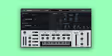
SubLab XL
1. SubLab XL Future Audio Workshop
8.4
Type
808 and sub synthesizer
Sub weight
Very high
Best genre
Trap and drill
Was $80Now $39 View price
Bass Master
2. Bass Master Loopmasters Plugins
8.5
Type
Two-layer bass instrument
Sub weight
High
Best genre
General electronic
MODO BASS 2
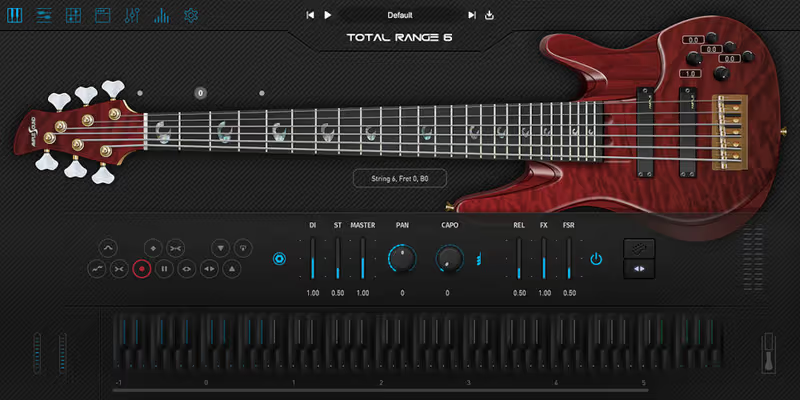
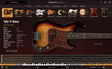
3. MODO BASS 2 IK Multimedia
7.5
Type
Physically modelled electric bass
Sub weight
Low
Best genre
Lo-fi, R&B, soul
Bass Engine 2 8.0
Type
Preset-based bass instrument
Sub weight
High
Best genre
Hip-hop and trap
Was $80Now $39 View price
Type
Monophonic analogue emulation
Sub weight
Medium
Best genre
House, techno, acid
bx_subsynth 8.0
Type
Subharmonic generator
Sub weight
High when pushed
Best genre
Any sample-based production
Was $75Now $30 View price
Ample Bass TR6 7.4
Type
Sampled electric bass
Sub weight
Low
Best genre
Funk, rock, busy arrangements
Read more →

Methodology

Who is this for

Beat makers, sample-based producers, and electronic musicians who need reliable sounds and tools for finishing tracks fast.

Our testing process

We test every pack and plugin in actual beat sessions, from programming drum patterns to full arrangement and mixdown. We evaluate how tools perform in a dense mix, not in solo.

Why you should trust us

We buy most reviewed plugins ourselves. Occasionally we receive NFRs for evaluation, but this never guarantees a review or positive verdict. We may earn commissions from links, but our editorial choices are never for sale.

Also considered

For every category, we audition the top 8 to 15 options, discarding any that fail our usability test or deliver a low inspiration rate in a real session.

Top Picks

01 Future Audio Workshop

SubLab XL

Best for Trap 808s

The 808 plugin that solves the slide problem properly. Essential for trap and drill, useless for anything else.

Tested score
8.4
out of 10

How it scored

  • Sub weight 9.5

    X-Sub reinforces the fundamental convincingly.

  • Glide behaviour 10.0

    Pitch held solid across a full slide.

  • Translation 9.0

    Drive section fixes phone-speaker loss.

  • Versatility 5.0

    808s only, no melodic or played bass.

Why we picked it

Best for trap and drill producers who need 808s that hold pitch through a slide and translate on phone speakers without extra processing.

Who should skip it

Avoid if you want played bass, plucked figures, or anything melodic beyond a sub line, because this is a dedicated 808 machine and nothing else.

The good

  • Glide holds pitch with no thinning
  • X-Sub subharmonic generator adds real weight
  • Saturation solves phone-speaker translation
  • Good stock attack samples for trap and drill

The bad

  • Only makes 808s and subs
  • Phase issues between layers are easy to miss
  • No played or plucked bass capability
Type
808 and sub synthesizer
Sub weight
Very high
Best genre
Trap and drill
Format
VST / AU / AAX
Platform
macOS / Windows
License
Perpetual
Price
$39 (was $80)
Why it scored that way

SubLab XL was built by people who understood that the hard part of an 808 is the slide, not the sound.

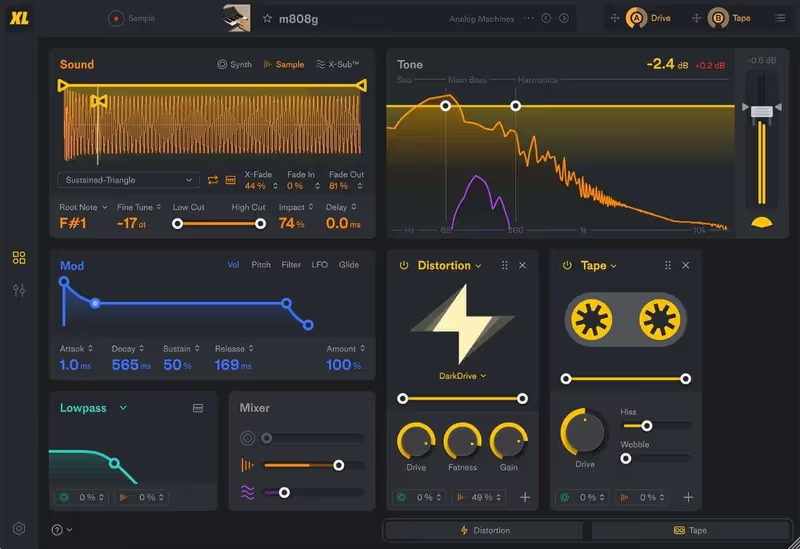
Three layers make up a patch. A synth sub for the fundamental, a sample layer for the attack and character, and the X-Sub engine that generates subharmonics to reinforce the bottom. I programmed the sliding 808 line at 140 BPM with a sixty millisecond glide and the pitch stayed solid across the whole slide, with no thinning at the midpoint where sample-based 808s usually collapse. That alone justifies the plugin for anyone making trap or drill.

The saturation section is aimed squarely at the phone-speaker problem. Pushing the drive adds harmonics above the fundamental, and the difference on a laptop speaker was obvious: at zero drive the line was barely audible, at around forty percent it was clearly present without getting louder on the meter. The attack layer is where the character comes from, and there are enough samples to cover a hard trap knock and a softer drill thump without loading anything external.

The friction is that it is a specialist. It does 808s and subs extremely well and it does not really do anything else, so a plucked bass figure or a played bassline is beyond it. The interface is clear but the three-layer structure means you can end up with phase problems between the sub and the sample layer, and there is a phase control for exactly that reason which is easy to miss. At fifty dollars it is the best 808 plugin here and close to essential if trap is your genre.
Heard on
Widely used for sliding 808s in trap production Popular in drill and modern hip-hop sessions Referenced across 808 design tutorials
Check price — $39
02 Loopmasters Plugins

Bass Master

Best for Quick Bass

Two layers, one knob, ten dollars. The fastest fix for bass that will not translate.

Tested score
8.5
out of 10

How it scored

  • Value 10.0

    Usable results at ten dollars.

  • Translation 9.0

    Mid layer carries harmonics automatically.

  • Speed to result 9.5

    Preset to finished bass in under a minute.

  • Glide behaviour 5.5

    Functional, but slides do not hold like SubLab.

Why we picked it

Best for producers whose bass is consistently too boomy or too thin and who want a two-layer structure that enforces good low-end habits for ten dollars.

Who should skip it

Avoid if you need long convincing 808 slides or deep modulation, because the glide is basic and the blend knob is most of the control you get.

The good

  • Two-layer structure prevents thin or boomy bass
  • Presets usable with no EQ
  • Remarkable value at ten dollars

The bad

  • Basic glide, weak on long 808 slides
  • Very limited modulation
  • You outgrow the blend knob quickly
Type
Two-layer bass instrument
Sub weight
High
Best genre
General electronic
Format
VST / AU / AAX
Platform
macOS / Windows
License
Perpetual
Price
$79
Why it scored that way

Bass Master costs ten dollars and is built so you cannot really get it wrong. Two layers, one blend knob, done.

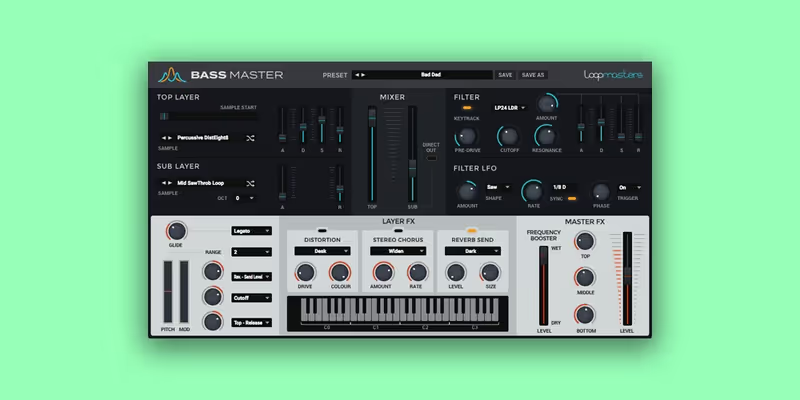
The design philosophy is restriction. You pick a sub sound, you pick a top sound, and you blend between them with one control. That is nearly the whole plugin, and for producers who consistently make bass that is too boomy or too thin it works because the two-layer structure enforces the thing they should have been doing anyway. I set a clean sub on the bottom, a distorted mid on top, and had a bass that translated on laptop speakers within a minute.

What surprised me was how usable the presets are without editing. The sustained sub under a busy drum pattern needed no EQ at all, which is unusual at any price, because the mid layer is already carrying the harmonics that make the note audible on small speakers. There are filter, distortion, and envelope controls for shaping, plus a decent selection of both sub and top sounds, so it is more flexible than the simple interface suggests.

The friction is the ceiling, which arrives fast. The glide is functional rather than good, so a long 808 slide does not hold up the way it does in SubLab XL. There is no deep modulation, the effects are basic, and once you know what you are doing you will want more control than the blend knob offers. At ten dollars none of that is a real complaint, and it remains the easiest recommendation on this list for someone whose low end is currently a mess.

Heard on
A common first bass plugin for bedroom producers Popular in Loopmasters production bundles Used for fast bass parts across electronic genres
Check price — $79
03 IK Multimedia

MODO BASS 2

Best for Played Bass

Real physical modelling, so slides and technique are generated rather than faked. The pick for played bass, not for 808s.

Tested score
7.5
out of 10

How it scored

  • Realism 9.5

    Modelled slides sound like a player, not a crossfade.

  • Technique control 9.5

    Plucking position and pickup choice genuinely change tone.

  • Sub weight 5.0

    Electric bass range, no 808 territory.

  • CPU load 6.0

    Real-time modelling is expensive.

Why we picked it

Best for lo-fi, R&B, and soul producers who need realistic played electric bass with genuine slides, ghost notes, and technique rather than sampled approximations.

Who should skip it

Avoid if you need 808s or heavy sub weight, because this models a real electric bass and cannot produce the low end trap and drill require.

The good

  • Slides and transitions are modelled, not crossfaded
  • Deep, musically meaningful technique controls
  • Keyswitches for slaps, mutes, and harmonics

The bad

  • Cannot produce 808 or heavy sub weight
  • CPU-heavy in real time
  • Default patches need real adjustment
Type
Physically modelled electric bass
Sub weight
Low
Best genre
Lo-fi, R&B, soul
Format
VST / AU / AAX
Platform
macOS / Windows
License
Perpetual
Price
$199
Why it scored that way

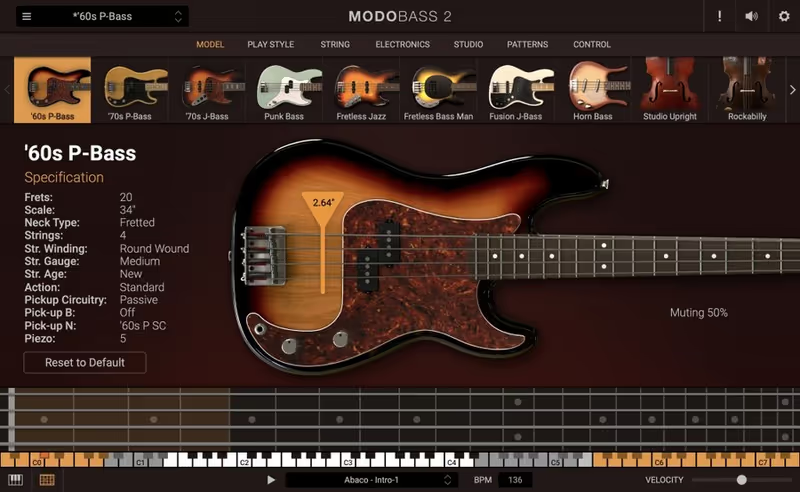
MODO BASS 2 models the instrument rather than sampling it, so slides, ghost notes, and fret noise happen for real.

Sampled bass libraries fall apart on transitions, because a slide between two notes has to be faked from separate recordings. MODO models the string, the fret, the pickup, and the finger, so when I wrote the plucked bass figure with a slide into the third note, the slide was generated rather than crossfaded and it sounded like a player. On a lo-fi or R&B beat where the bass is meant to feel human, that is the whole point.

The control set is deep in a way that rewards knowing something about bass guitar. You choose the instrument model, then the playing style, the plucking position, the pickup configuration, and how hard the notes are hit, and each of those changes the tone in the way it would on a real instrument. Moving the plucking hand closer to the bridge on the plucked figure brightened it exactly as expected. There is also a keyswitch system for slaps, mutes, and harmonics.

The friction is that it is not a sub machine. The low end is realistic electric bass low end, which means it will not give you a trap 808, and asking it to sit under a drill beat is the wrong job entirely. It is also CPU-heavy because the modelling runs in real time, and the sheer number of parameters means the default patch rarely sounds right without ten minutes of adjustment. At around fifty dollars it is excellent value for what it does, and what it does is a narrow, high-quality thing.

Heard on
Used for realistic bass parts in R&B and soul production Popular where hiring a bass player is not an option Referenced in IK Multimedia modelling demonstrations
Check price — $199
04 DopeSONIX

Bass Engine 2

Best for Hip-Hop Bass

A big library of bass sounds already finished for hip-hop. Fast to use, expensive for what it is.

Tested score
8.0
out of 10

How it scored

  • Library quality 9.0

    Consistently well-finished sounds across categories.

  • Speed to result 9.0

    Usable 808 found and placed in a minute.

  • Sub weight 8.5

    Solid, pre-saturated low end.

  • Editing depth 5.5

    Macros only, no deep envelope control.

Why we picked it

Best for hip-hop and trap producers who want a large library of pre-mixed 808 and bass sounds that need no processing before they sit in a beat.

Who should skip it

Avoid if you want to design sounds from scratch or need precise envelope control, because macros are the ceiling and the presets are already committed.

The good

  • Large, consistently high-quality sound library
  • Sounds arrive already mixed for the genre
  • Sensible macro controls for quick shaping

The bad

  • Limited editing beyond the macros
  • Glide is adequate rather than strong
  • Expensive next to cheaper rivals
Type
Preset-based bass instrument
Sub weight
High
Best genre
Hip-hop and trap
Format
VST / AU / AAX
Platform
macOS / Windows
License
Perpetual
Price
$39 (was $80)
Why it scored that way

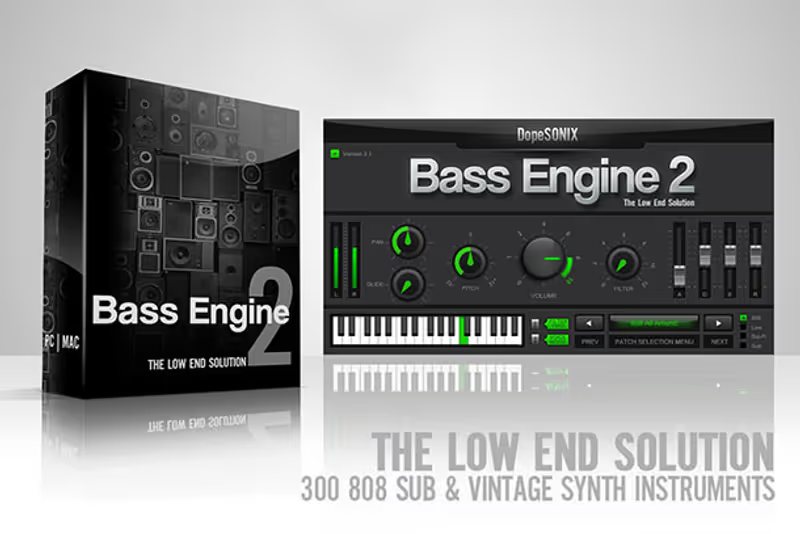
Bass Engine 2 is a browser full of bass sounds already mixed for hip-hop. You audition rather than program.

This is the opposite approach to MODO. Instead of giving you controls, it gives you a library of bass sounds that have already been processed for the genre, so the saturation, compression, and EQ decisions are baked in. I scrolled through the 808 category, found a knock with the right amount of grit in about a minute, and it sat under the busy drum pattern without any additional processing. For producers who want to write rather than mix, that is a real time saving.

The library breadth is the strength. There are hard trap 808s, softer drill subs, distorted bass growls, and cleaner synth basses, and the quality is consistently high because each one has been finished by someone who knew the target. Macro controls let you adjust drive, tone, and envelope without going deep, which covers most of the tweaking a beat actually needs.

The friction is exactly what you would expect from a preset-led instrument. When a sound is nearly right but the decay is wrong in a specific way, you can only push it so far before you hit the limit of the macros. The glide is adequate rather than strong, so long slides are better handled by SubLab XL. At eighty dollars it is the most expensive of the 808-focused options here, which is harder to justify when Bass Master covers similar ground for a tenth of the price, though the library quality is genuinely higher.

Heard on
Popular in hip-hop and trap beat production Used where speed matters more than sound design Referenced in DopeSONIX product demonstrations
Check price — $39
05 TAL

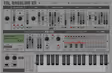
TAL-BassLine-101

Best for Acid Bass

An SH-101 with a sequencer. The acid and house bass specialist, and nothing like an 808 machine.

Tested score
7.5
out of 10

How it scored

  • Character 9.5

    Filter squelch is convincingly modelled.

  • Sequencer 9.0

    Per-step accents and slides make lines move.

  • Sub weight 7.0

    Solid with saturation, not 808 territory.

  • Versatility 4.5

    Monophonic and narrowly vintage.

Why we picked it

Best for house, techno, and acid producers who want authentic SH-101 style squelch with a step sequencer that supports per-step accents and slides.

Who should skip it

Avoid if you need 808s, chords, or realistic bass, because it is monophonic, vintage in character, and built for one specific job.

The good

  • Authentic resonant filter squelch
  • Built-in sequencer with accents and slides
  • Saturation gives it real weight in a mix

The bad

  • Monophonic, so no chords
  • Tiny hardware-style controls
  • Useless for 808 or played bass work
Type
Monophonic analogue emulation
Sub weight
Medium
Best genre
House, techno, acid
Format
VST / AU / AAX
Platform
macOS / Windows
License
Perpetual
Price
$69
Why it scored that way

TAL-BassLine-101 is an SH-101 with a sequencer attached, and it makes acid basslines almost automatically.

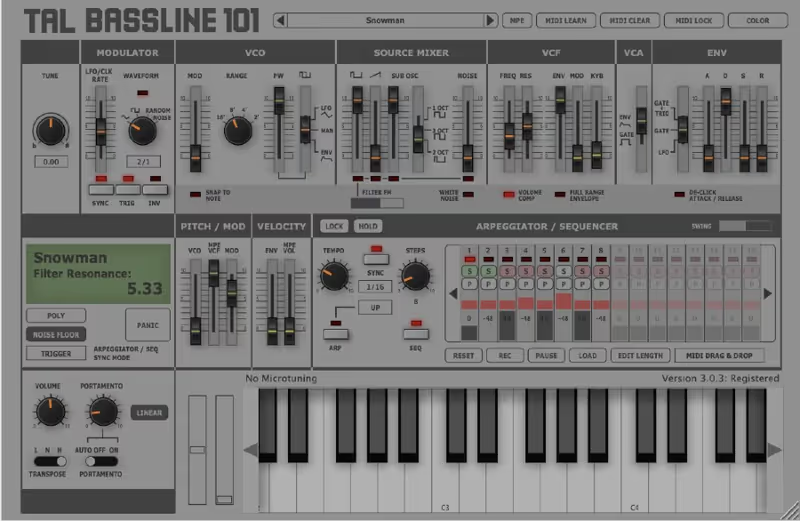
Monophonic, one oscillator with a sub, one resonant low-pass filter, and an envelope you can send to the cutoff. That architecture is the reason acid music exists, and this emulation captures the specific squelch that happens when you push resonance and let the envelope open the filter on each note. I ran a sixteenth-note pattern through the built-in sequencer, turned up resonance and envelope amount, and had a moving acid line within a couple of minutes.

The sequencer is what makes it fun rather than merely accurate. You can write a pattern, add accents and slides per step, and then perform the filter live over the top, which is how these lines were originally made and produces results that are hard to program note by note. On a house or techno beat it slots straight in, and the saturation stage gives it enough weight to work as the main bass rather than a decoration.

The friction is scope. It is monophonic, so no chords, and it is a specific vintage character rather than a general bass tool, so it will not give you an 808 or a realistic played bass. The interface is a faithful reproduction of a small hardware panel, which means tiny controls and no visual feedback about what the filter is doing. At sixty-nine dollars it is a specialist purchase that house, techno, and acid producers will use constantly and that a trap producer would rarely open.

Heard on
Used for acid basslines in house and techno A common software stand-in for SH-101 hardware Referenced in acid production tutorials
Check price — $69
06 Brainworx

bx_subsynth

Best for Low Repair

A subharmonic repair tool that manufactures low end from thin source material. Situational, and cheap enough to own.

Tested score
8.0
out of 10

How it scored

  • Repair ability 9.0

    Adds real fundamental to thin sampled bass.

  • Band control 8.5

    Three bands keep the addition targeted.

  • Value 9.5

    Ten dollars for a genuine problem solver.

  • Everyday use 5.0

    Sits unused for weeks between sessions.

Why we picked it

Best for producers rescuing thin sampled bass, weak loops, or finished bounces that need low-frequency weight added after the recording exists.

Who should skip it

Avoid if you want an instrument to write with, and be careful in general, because over-generating subharmonics eats headroom and causes limiter problems later.

The good

  • Creates low end that was never in the source
  • Three independent bands keep it targeted
  • Per-band saturation aids small-speaker translation

The bad

  • Very easy to overdo and eat headroom
  • Not an instrument you write with
  • Situational rather than everyday
Type
Subharmonic generator
Sub weight
High when pushed
Best genre
Any sample-based production
Format
VST / AU / AAX
Platform
macOS / Windows
License
Perpetual
Price
$30 (was $75)
Why it scored that way

bx_subsynth is not an instrument, it is a repair tool. It manufactures low end that was never in the recording.

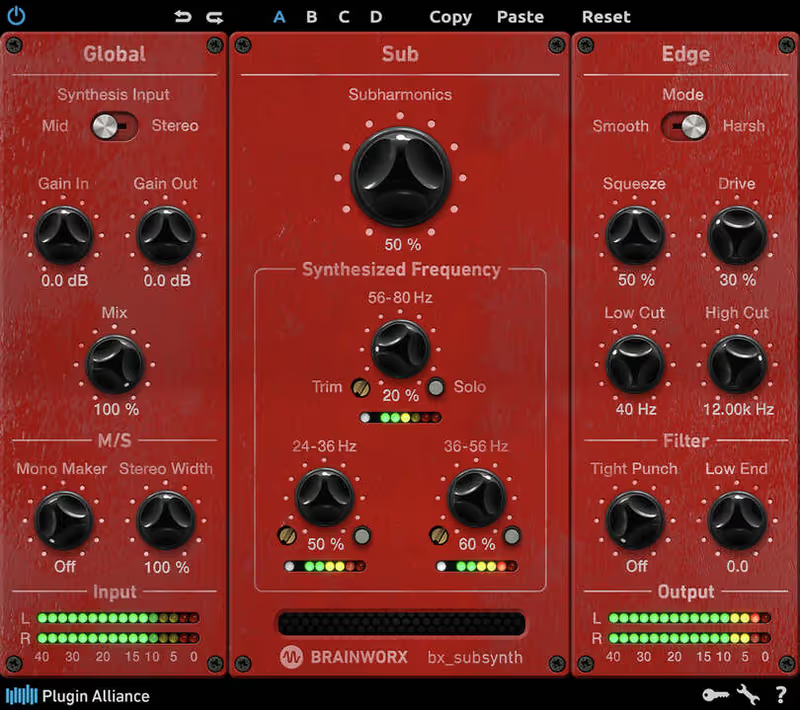
This one earns its place for a different reason. It takes audio that already exists and synthesises subharmonic content underneath it, which means a bass part that came out thin, a sampled loop with no bottom, or a whole drum bus can be given weight after the fact. I ran a thin sampled bassline through it, engaged the lowest band, and got a solid fundamental that had simply not been in the source material.

The three-band structure is what makes it controllable. You can add sub only in the lowest range and leave the upper bass untouched, or push the middle band to add body without making the track boomy. Each band has its own saturation, so the generated content can be given harmonics that let it survive on small speakers. On a sampled loop from an old record it added weight without the muddiness that a simple low-shelf boost causes.

The friction is that it is easy to overdo and hard to undo. Generated subharmonics are not free, and pushing the lowest band too far eats headroom fast and creates low-frequency energy that a limiter will fight with later. It is also a specialist tool that will sit unused for weeks and then rescue a session, which makes it a hard first purchase. At ten dollars through Plugin Alliance it costs nothing to have available, and that is really the argument for it.

Heard on
Used to add weight to sampled loops and breaks Popular for reinforcing thin bass on finished mixes Referenced in Plugin Alliance low-end tutorials
Check price — $30
07 Ample Sound

Ample Bass TR6

Best for Bright Bass

A brightly recorded sampled electric bass with thorough articulations. Cuts through density, weaker on slides.

Tested score
7.4
out of 10

How it scored

  • Recording quality 9.0

    Bright, detailed, cuts through busy mixes.

  • Articulations 9.0

    Slides, mutes, harmonics, and slaps all sampled.

  • Realism on transitions 6.5

    Crossfades leave occasional audible seams.

  • Sub weight 5.0

    Upper-mid character, minimal sub.

Why we picked it

Best for producers who want a bright, cutting, deeply sampled electric bass with detailed articulations that stays audible in dense busy arrangements.

Who should skip it

Avoid if you need convincing long slides or heavy sub weight, because sampled transitions are crossfades and the character sits in the upper mids.

The good

  • Bright character that cuts through dense mixes
  • Thorough sampled articulation set
  • String and fret position genuinely change tone

The bad

  • Crossfaded slides sound less convincing
  • Large download and slow loading
  • Most expensive plugin on this list
Type
Sampled electric bass
Sub weight
Low
Best genre
Funk, rock, busy arrangements
Format
VST / AU / AAX
Platform
macOS / Windows
License
Perpetual
Price
$119
Why it scored that way

Ample Bass TR6 is a deeply sampled electric bass with a bright, cutting character that suits busy arrangements.

Where MODO models, this samples, and the trade-off is real. What you gain is a specific instrument recorded properly, with a bright Rickenbacker-style bite that cuts through a dense beat in a way modelled bass sometimes struggles to. On the plucked bass figure it had presence in the upper mids without any EQ, which meant it stayed audible under a busy drum pattern where a warmer bass would have been buried.

The articulation set is thorough. Sustains, hammer-ons, pull-offs, slides, palm mutes, harmonics, and slaps are all recorded and switchable, and the fingering system lets you specify which string and fret a note is played on, which changes the tone in the same way it would on the real instrument. Choosing a note high on a low string gives a rounder sound than the same pitch played open, and having that control matters if you care about realism.

The friction is sampling's usual weakness. Transitions between articulations are crossfades, so a long slide is less convincing than MODO's modelled version, and there is an occasional audible seam. The library is a large download, loading is slow, and the interface has a lot of tabs. At ninety-five dollars it is the most expensive plugin here, which is a lot for one bass, though the recording quality is high and the character is distinctive enough to be worth it if that is the sound you want.

Heard on
Used for cutting bass parts in dense arrangements Popular in funk and rock-influenced beat production Referenced in Ample Sound articulation demos
Check price — $119

What didn’t make the list

3 cut
  • Ample Bass Upright Ample Sound

    A convincing upright bass for jazz-leaning beats, but it is a narrow instrument next to the TR6 from the same developer, which covers far more sessions.

  • SubLab Future Audio Workshop

    Still a strong 808 generator, but SubLab XL supersedes it with better layering and a bigger engine for ten dollars more, so buying the older version makes little sense.

  • Bass Engine 1 DopeSONIX

    A capable preset-driven bass instrument, but version 2 improves the library and the interface enough that the original is hard to recommend at a similar price.

Frequently Asked Questions

Why does my 808 disappear on phone speakers?

Because a phone speaker cannot reproduce anything below roughly 300Hz, so it only plays the harmonics above the fundamental. If your 808 is a clean sine wave it has almost no harmonics, which means nothing is left. Add saturation or distortion to generate upper harmonics and the ear reconstructs the missing sub.

Should I use an 808 plugin or 808 samples?

A plugin if you want the note to slide, because a generated 808 glides in pitch cleanly while a sample has to be pitched and often thins out. Samples if you want a specific recognisable character that has already been processed. Many producers layer both, using the sample for attack and the plugin for sustain.

How do I stop the 808 and kick fighting?

Sidechain the 808 to the kick with a fast attack and a short release, so the 808 dips only for the length of the kick transient. Alternatively, high-pass the kick and let the 808 own everything below 80Hz. Doing both at once usually leaves the low end thin.

Do I need a separate bass plugin if I already own a synth?

Not strictly, since most synths can make a sine wave. What dedicated bass plugins add is glide handling that stays solid, built-in saturation aimed at phone-speaker translation, and layering of a sub with a mid-range character sound. Those save time on the part of mixing that beginners find hardest.

Written By

Marcus Vega

Marcus is a hip-hop producer and drum programmer based in Atlanta. He builds beats for independent rappers, licenses tracks through BeatStars, and has been in the top 500 producers on the platform for three years. He judges every sample pack by one question: does it help him finish a beat faster?