






Best Jazz Sample Packs for Beat Makers (2026)

Jazz sample packs solve a problem most producers cannot solve any other way. You cannot program a walking upright bass line that breathes, and you cannot fake the moment a brushed snare drags behind the beat.

We buy most of what we test. When you buy through a link on this page we may earn a commission, which never affects our picks or verdicts. How we work.

Jada Osei
By Jada Osei

Jada makes lo-fi beats, boom bap, and chill hop. She samples vinyl, builds beats on an SP-404 and in Ableton, and runs a YouTube beat-making channel with over 50K subscribers. She values vibe over perfection and believes the best sample packs sound like they were found, not manufactured.

Jazz is the source material that built most of hip-hop, and it remains the most useful thing a beat maker can sample because of what live musicians do that programming cannot. A walking bass line played by a person pushes and pulls against the click. A brushed snare lands fractionally late. A Rhodes chord has a voicing with a ninth in the middle of it that nobody programming from a scale would think to place there. Those details are the entire reason a jazz-sampled beat feels warm and a synthesised one does not.

We tested each of these by chopping them in a sampler at 85 BPM. The questions were how cleanly the loops sliced at transients, whether an isolated chord was rich enough to build a progression from, how much room noise and instrument bleed the recordings carried, and how much processing each loop needed before it sat in a dusty beat. Packs that were recorded too cleanly scored lower here than they would in a general review, because a pristine jazz loop needs work before it belongs in this genre.

There is a real split in this list between finished loops and raw material, and which you want depends on how you work. If you are chopping rather than arranging, the chopping workflow matters more than the pack, and pairing these with the vinyl texture layers is what gets you the rest of the way to a convincing dusty sound.

Pick one in 10 seconds

Short version

Compare all 7

Format
WAV 24-bit
Content
Melodic loops, breaks, bass, one-shots
Tempo
70 to 90 BPM
Format
WAV 24-bit
Content
Full band loops and instrument stems
Tempo
80 to 110 BPM
Jazz & Lounge Keys 8.1
Format
WAV 24-bit
Content
Rhodes, piano, and organ loops
Tempo
70 to 120 BPM
Format
WAV 24-bit
Content
Brushed and stick loops, fills, hits
Tempo
70 to 140 BPM
Format
WAV 24-bit
Content
Walking lines, sustains, single notes
Tempo
70 to 120 BPM
Jazz & Lounge Guitar 8.3
Format
WAV 24-bit
Content
Chord comps and single-note lines
Tempo
70 to 120 BPM
Jazz & Lounge Horns 8.3
Format
WAV 24-bit
Content
Section stabs, sustains, solo phrases
Tempo
70 to 130 BPM
Read more →

Methodology

Who is this for

Beat makers, sample-based producers, and electronic musicians who need reliable sounds and tools for finishing tracks fast.

Our testing process

We test every pack and plugin in actual beat sessions, from programming drum patterns to full arrangement and mixdown. We evaluate how tools perform in a dense mix, not in solo.

Why you should trust us

We buy most reviewed plugins ourselves. Occasionally we receive NFRs for evaluation, but this never guarantees a review or positive verdict. We may earn commissions from links, but our editorial choices are never for sale.

Also considered

For every category, we audition the top 8 to 15 options, discarding any that fail our usability test or deliver a low inspiration rate in a real session.

Top Picks

01 Loopmasters

Freddie Joachim - Jazz Hop Classics

Best for Finished Loops

Artist-made jazz hop that arrives sounding finished. Fast to use, and committed to one voice.

Tested score
8.3
out of 10

How it scored

  • Immediate usability 9.5

    Loops work with no processing at all.

  • Character 9.5

    Genuine artist voice, not generic content.

  • Chop-ability 8.0

    Slices cleanly, though transients are softened.

  • Flexibility 6.0

    Processing is baked in and irreversible.

Why we picked it

Best for producers who want jazz hop loops that already sound like finished beats and would rather write arrangements than process raw source material.

Who should skip it

Avoid if you want raw material to shape yourself, because the filtering and saturation are baked in and cannot be undone.

The good

  • Loops already sound like finished beats
  • Genuine artistic character throughout
  • Drums and melodies are tonally matched

The bad

  • Processing cannot be undone
  • Noise builds up when layering loops
  • Pulls tracks toward the artist's aesthetic
Format
WAV 24-bit
Content
Melodic loops, breaks, bass, one-shots
Tempo
70 to 90 BPM
Key
Labelled
License
Royalty-free
Price
$45
Why it scored that way

This is jazz hop made by someone who actually makes jazz hop, and it shows in every loop.

Artist packs are often a name attached to generic content. This one is not. The loops carry the specific dusty, warm, slightly behind-the-beat quality that Freddie Joachim's own records have, which means they arrive already sounding like beats rather than like source material. I loaded a melodic loop and a break together and had something I would keep within five minutes, with no processing at all.

The processing is both the strength and the thing to understand before buying. These loops have been filtered, saturated, and noise-layered already, so they sit in a mix immediately and need almost nothing from you. For a producer who wants to write rather than engineer, that is a large time saving and the reason this is the first recommendation here.

The friction is that the processing is committed. When a loop is nearly right but slightly too dark, you cannot recover the high end that was rolled off before it was bounced, and layering two heavily processed loops can build up noise faster than expected. It is also a specific artistic voice, so a producer with their own established sound may find the loops pull tracks toward someone else's aesthetic. At forty-five dollars it is priced fairly for material this finished.

Heard on
Produced by an established jazz hop artist Used for immediate lo-fi beat construction Referenced in Loopmasters artist series releases
Check price — $45
02 Loopmasters

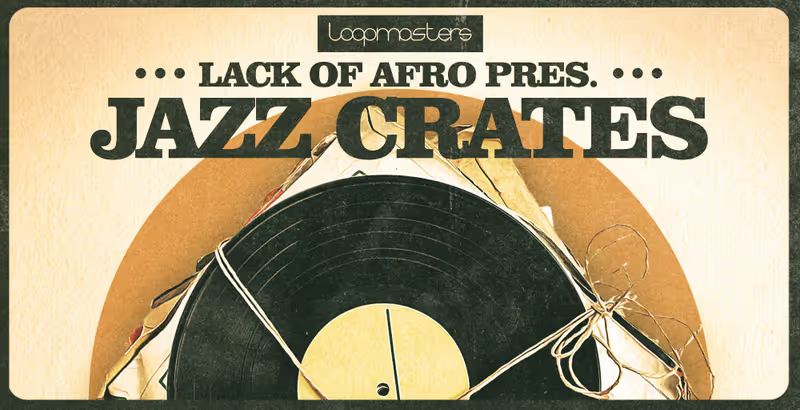
Lack of Afro Presents Jazz Crates

Best for Chopping Material

A real band in a real room, given to you as stems. The best chopping material here, and the most work.

Tested score
8.5
out of 10

How it scored

  • Chop-ability 9.5

    Slices carry ensemble character and room.

  • Authenticity 9.5

    Live band with bleed rather than multitracked.

  • Value 9.0

    Large volume of material at twenty-nine dollars.

  • Immediate usability 6.0

    Unmixed, with levels varying between loops.

Why we picked it

Best for producers who chop rather than arrange and want live band recordings with real room sound, supplied as both full loops and separated stems.

Who should skip it

Avoid if you want finished loops, because nothing is mixed for you and the instrument bleed prevents true isolation of any single part.

The good

  • Genuine live band with room and bleed
  • Full loops and separated stems both supplied
  • Slices retain ensemble character when chopped
  • Strong value for the amount of material

The bad

  • Nothing is mixed or level-matched
  • Bleed prevents clean instrument isolation
  • Needs real processing before it sits in a beat
Format
WAV 24-bit
Content
Full band loops and instrument stems
Tempo
80 to 110 BPM
Key
Labelled
License
Royalty-free
Price
$34
Why it scored that way

Jazz Crates is a live band recorded in a room, given to you as stems. It is the closest thing here to digging without the clearance.

This is raw material in the best sense. A real band played together, the room was captured rather than removed, and you get both the full mix and the separated instruments. That combination is what makes it genuinely chop-friendly: you can take the full loop when you want the ensemble feel and bleed, or pull the keys alone when you need a clean chord to build from. I chopped a full-band loop into eight slices and each one had usable ensemble character.

The bleed is the feature people misunderstand. Because the instruments were recorded together, the drum mics picked up the keys and the room, which means a chopped slice carries a sense of place that multitracked studio recordings lose. When you pitch a slice down and add vinyl noise, that captured room is what makes it read as a record rather than as samples.

The friction is that raw material is work. Nothing here is mixed for you, the levels vary between loops, and getting a slice to sit in a beat takes EQ and compression that the Freddie Joachim pack would have done already. The bleed that helps the ensemble sound also means you cannot fully isolate anything, so a keys stem still has faint drums in it. At twenty-nine dollars it is very good value for the volume of usable material.

Heard on
Recorded with a live jazz and funk band Used as a royalty-free alternative to crate digging Referenced in Loopmasters live recording series
Check price — $34
03 Organic Loops

Jazz & Lounge Keys

Best for Chord Loops

The harmony pack. Real jazz voicings that will teach you chords, recorded too cleanly for the genre.

Tested score
8.1
out of 10

How it scored

  • Harmonic richness 9.5

    Voicings a producer would not write alone.

  • Playing quality 9.0

    Genuine jazz keyboard performances.

  • Labelling 9.0

    Key and tempo marked on every loop.

  • Dusty character 5.0

    Too clean, needs processing to belong.

Why we picked it

Best for producers whose harmony is limited and who want real jazz keyboard voicings on Rhodes, piano, and organ with clear key and tempo labelling.

Who should skip it

Avoid if you want dusty ready-to-use material, because these are cleanly recorded and need filtering, saturation, and noise before they sit in a lo-fi beat.

The good

  • Voicings genuinely expand your harmony
  • High-quality live keyboard performances
  • Every loop labelled by key and tempo

The bad

  • Recorded too cleanly for dusty genres
  • No drums or bass content at all
  • Expensive for a single instrument family
Format
WAV 24-bit
Content
Rhodes, piano, and organ loops
Tempo
70 to 120 BPM
Key
Labelled
License
Royalty-free
Price
$45
Why it scored that way

This is the harmony pack. If your beats keep using the same four chords, the voicings here are the fix.

The value of this pack is educational as much as practical. A jazz pianist voices chords in ways that a producer working from a scale simply does not think of, placing a ninth in the middle of a chord or dropping the root entirely and letting the bass imply it. Isolating a single chord from one of these loops and rebuilding a progression around it gave me harmony I would never have written, which is worth more than the loop itself.

The recording quality is high and the playing is genuinely good, covering Rhodes for the warm lo-fi end, acoustic piano for something brighter, and organ for a more soulful character. Loops are labelled by key and tempo, which sounds basic and matters enormously when you are trying to fit a chord loop against an existing bass line. The Rhodes material in particular sits naturally in a lo-fi context with almost no processing.

The friction is cleanliness. These were recorded well in a controlled space, which means there is very little noise, room, or character to work with, so they can sound too polished against dusty drums. Getting them to belong takes a filter, some saturation, and usually a noise layer. There is also no drum or bass content at all, so this is one instrument in a beat rather than the beat itself, which makes forty-five dollars feel like a lot until you use the voicings.

Heard on
Used for jazz chord progressions in lo-fi production Popular for Rhodes loops in chill beat making Referenced in Organic Loops live instrument series
Check price — $45
04 Loopmasters

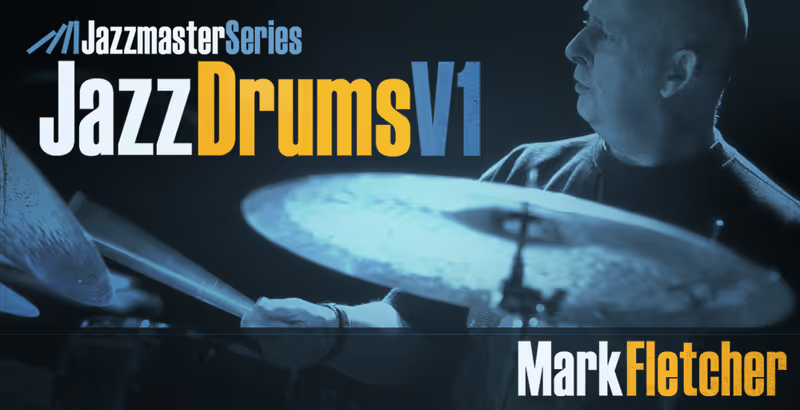
Jazz Drums Vol1 - Mark Fletcher

Best for Live Drums

A session drummer with brushes and a room. The swing is the product, and quantising destroys it.

Tested score
8.5
out of 10

How it scored

  • Timing feel 10.0

    Pushes and drags the way a player does.

  • Brush textures 9.5

    Continuous swirl no one-shot library can fake.

  • Room quality 9.0

    Natural depth from room microphones.

  • Editability 5.5

    Quantising removes the feel you bought.

Why we picked it

Best for producers who need drums that swing and breathe, particularly brushed kit textures that cannot be reconstructed from individual one-shot samples.

Who should skip it

Avoid if you need tight close-mic drums or plan to quantise heavily, because the room sound is baked in and gridding removes the timing feel.

The good

  • Real drummer timing that grids cannot fake
  • Brushed textures unavailable elsewhere
  • Individual hits included alongside loops

The bad

  • Resists quantising and grid editing
  • Room sound cannot be removed
  • Most expensive drum option here
Format
WAV 24-bit
Content
Brushed and stick loops, fills, hits
Tempo
70 to 140 BPM
Key
Not applicable
License
Royalty-free
Price
$52
Why it scored that way

A real drummer playing real jazz kit, brushes included. Nothing programmed sounds like this.

Programmed drums fail at jazz for a specific reason: the swing is not a fixed percentage. A drummer pushes slightly ahead in one bar and drags in the next, and the ride cymbal pattern breathes with the phrase. These loops carry that, and dropping one under a chord progression immediately made the whole thing feel less rigid than the grid-locked beat I had been building.

The brushed material is the standout and the hardest thing to get elsewhere. Brushes on a snare produce a continuous swirling texture rather than discrete hits, which no sample library of individual one-shots can reconstruct, so having real brushed loops is the only practical route to that sound. The room microphones give the kit natural depth, and the individual hits included alongside the loops let you reinforce the pattern where you need more weight.

The friction is that live drums resist grid editing. Slicing these to a grid removes exactly the timing feel you paid for, so they work best used as whole loops or chopped at musically sensible points rather than quantised. The room sound is baked in, so you cannot make the kit tight and close if that is what a track needs. At forty-nine dollars it is the most expensive drum option here, which is defensible given it is a session drummer's performance.

Heard on
Performed by an established session jazz drummer Used for brushed kit textures in lo-fi and jazz hop Referenced in Loopmasters live drum series
Check price — $52
05 Loopmasters

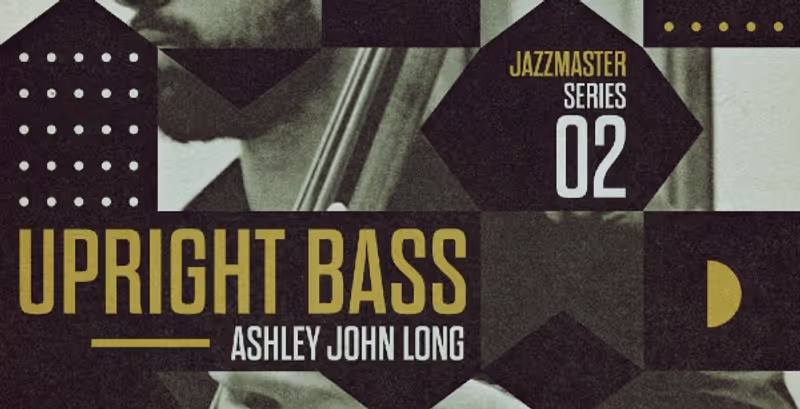
Jazz Master - Upright Bass - Ashley John Long

Best for Walking Bass

Walking upright bass played by a real bassist. Irreplaceable, and it dictates your chord changes.

Tested score
7.6
out of 10

How it scored

  • Player realism 9.5

    Timing and finger noise sell the instrument.

  • Walking lines 9.5

    Melodic movement rather than root notes.

  • Harmonic flexibility 5.5

    Lines commit to a specific chord sequence.

  • Dusty character 6.0

    Cleanly recorded, needs treatment.

Why we picked it

Best for producers who need walking upright bass lines with real player timing and string noise that MIDI instruments cannot convincingly reproduce.

Who should skip it

Avoid if your chord progressions are already fixed, because a walking line commits to a harmonic sequence and you must build around it.

The good

  • Real player timing around the beat
  • Finger and string noise retained
  • Walking lines are genuinely melodic

The bad

  • Lines lock you to a chord sequence
  • Recorded cleanly, needs dust added
  • Expensive for one instrument
Format
WAV 24-bit
Content
Walking lines, sustains, single notes
Tempo
70 to 120 BPM
Key
Labelled
License
Royalty-free
Price
$45
Why it scored that way

A walking upright bass line is the one thing you genuinely cannot program, and this pack is the honest way around that.

Upright bass has two qualities that MIDI cannot reproduce. The first is timing, because a bassist walking a line places notes fractionally around the beat in a pattern that changes with the harmony. The second is noise: the finger sliding on the string, the click of the note starting, the body of the instrument resonating between notes. Both are present here and both are why a beat built on this sounds like a recording.

The walking lines are the reason to buy it. I put one under a Rhodes progression and the whole thing immediately felt like a band rather than a stack of loops, and crucially the bass was doing something melodic rather than following the root. The sustained notes and individual samples are useful for building your own lines where a walking loop does not fit the chord changes, though playing them convincingly takes some care.

The friction is harmonic commitment. A walking line is written against a specific chord sequence, so it only works if your progression matches or you are willing to build around the bass rather than the other way round. That is a real constraint and it caught me out twice. The recordings are also fairly clean, so a dusty beat needs the usual filtering and noise treatment. At forty-five dollars for one instrument it is expensive, and it does something no cheaper option does.

Heard on
Performed by a professional upright bassist Used for authentic walking lines in jazz hop Referenced in Loopmasters solo instrument series
Check price — $45
06 Organic Loops

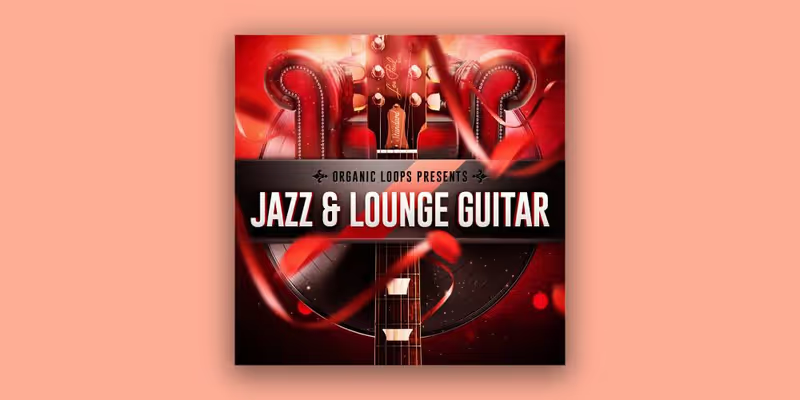
Jazz & Lounge Guitar

Best for Guitar Comping

Warm hollow-body comping that adds motion cheaply. Functional playing, and fewer real ideas than files.

Tested score
8.3
out of 10

How it scored

  • Tone 9.0

    Warm and rolled off, needs little processing.

  • Rhythmic value 9.0

    Comping adds motion without frequency weight.

  • Value 9.0

    Best price of the single-instrument packs.

  • Variety 6.0

    Many loops, fewer genuinely distinct ideas.

Why we picked it

Best for producers who want rhythmic hollow-body guitar comping that adds motion to an arrangement without taking up additional frequency range.

Who should skip it

Avoid if you want distinctive or characterful playing, because the performances are competent and functional rather than inspired.

The good

  • Warm tone that needs minimal processing
  • Comping adds motion without frequency clutter
  • Accurate key and tempo labelling

The bad

  • Playing is functional rather than characterful
  • Repetitive rhythmic patterns across loops
  • No drums or bass to build around
Format
WAV 24-bit
Content
Chord comps and single-note lines
Tempo
70 to 120 BPM
Key
Labelled
License
Royalty-free
Price
$28
Why it scored that way

Hollow-body jazz guitar comping is a specific texture, and this is the cheapest honest route to it.

Jazz guitar does something in an arrangement that keys cannot, filling the middle with rhythmic chord stabs that leave space rather than sustaining through it. The comping loops here are the useful part, short chord hits placed against the beat that give a track motion without adding harmonic weight. I layered one under a Rhodes progression and it added a rhythmic pulse that made the arrangement feel busier without occupying more frequency range.

The hollow-body tone is warm and rolled off naturally, which means it needs less processing than the keys pack from the same developer to sit in a lo-fi context. Single-note lines are included alongside the comping, and they work well as a counter-melody when a track needs something above the chords. Key and tempo labelling is present and accurate, which makes matching against existing material straightforward.

The friction is repetition. Guitar comping is by nature repetitive, and several loops here are variations on similar rhythmic patterns, so the genuinely distinct ideas number fewer than the file count suggests. The playing is competent rather than inspired, lacking the personality of the artist-led packs on this list. At twenty-five dollars that is a fair trade, and it remains the best-value single-instrument pack here.

Heard on
Used for jazz guitar comping in lo-fi arrangements Popular as a rhythmic layer under keys Referenced in Organic Loops guitar collections
Check price — $28
07 Organic Loops

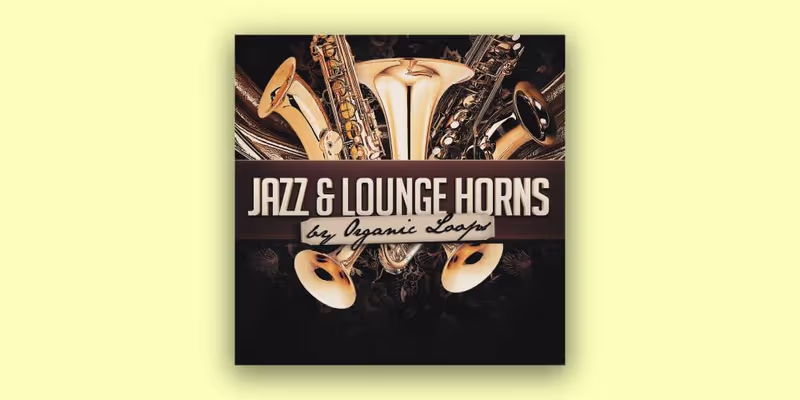
Jazz & Lounge Horns

Best for Horn Stabs

Real horn stabs with natural section width. The most expensive-sounding element here, and the easiest to misplace.

Tested score
8.3
out of 10

How it scored

  • Section realism 9.5

    Natural width from real players slightly apart.

  • Stab usability 9.0

    Short and rhythmic, easy to place as punctuation.

  • Impact 9.0

    Lifts a track more than processing can.

  • Ease of placement 5.5

    Dominates a mix and clashes with vocals.

Why we picked it

Best for producers who want real horn section stabs as punctuation in a jazz or soul-leaning beat, with natural width from multiple live players.

Who should skip it

Avoid if your track already has a vocal in the upper midrange, or if you want a sustained lead, because horns dominate and solo phrases lock to a key.

The good

  • Genuine section width from real players
  • Stabs work immediately as punctuation
  • Adds a quality no synthesised horn matches

The bad

  • Easily dominates a mix
  • Clashes with vocals in the upper midrange
  • Solo phrases commit hard to a key
Format
WAV 24-bit
Content
Section stabs, sustains, solo phrases
Tempo
70 to 130 BPM
Key
Labelled
License
Royalty-free
Price
$28
Why it scored that way

Horns are the element that makes a jazz beat sound expensive, and they are the hardest thing to fake.

A horn section is genuinely difficult to reproduce with samples because the sound depends on several players slightly out of tune with each other and slightly apart in time. These are real recordings of real players, so the section stabs have that natural width and imprecision, and dropping one at the end of a four-bar phrase lifted a track more than any amount of processing on the existing parts would have.

The material splits usefully between section stabs and solo phrases. Stabs are the more practical purchase, short and rhythmic and easy to place, while the solo lines are harder to use because a melodic phrase has to fit your harmony. I got most of my value from the stabs, using them as punctuation rather than as a lead element, which is how horns usually function in sampled hip-hop anyway.

The friction is placement. Horns are loud, bright, and attention-grabbing, so a stab in the wrong place dominates a mix and a stab in the wrong key is immediately obvious. They also occupy the same upper-midrange as a rap vocal, which means a track with both needs careful arrangement. The solo phrases in particular commit hard to a key and a mood. At twenty-five dollars it is fairly priced for a texture that is close to impossible to synthesise convincingly.

Heard on
Recorded with a live jazz horn section Used as punctuation in soul and jazz hop beats Referenced in Organic Loops live section series
Check price — $28

What didn’t make the list

3 cut
  • Jazz Lounge Flute Organic Loops

    Nicely played and genuinely useful for a specific texture, but a flute-only library is too narrow to justify a slot over the keys and guitar collections.

  • Jazz Noir BFD

    A characterful drum library with a strong dark tone, but it is an expansion for BFD rather than plain audio, which limits who can actually load it.

  • Modern Jazz Brushes ADpak XLN Audio

    Excellent brushed kit sounds, though it requires Addictive Drums 2 to run, and we wanted the drum slot to go to something any DAW can open.

Frequently Asked Questions

Is it legal to sample these jazz packs?

Yes. Every pack here is sold royalty-free, which means you can use the sounds in your own tracks and release them commercially without clearing anything. That is the whole practical advantage over sampling actual jazz records, where the recording and the composition both need clearing.

How do I make a clean jazz loop sound dusty?

Roll off above roughly 8kHz and below roughly 100Hz, add tape or vinyl noise underneath, and introduce a slow pitch wobble so the tuning drifts slightly. Bit-crushing to twelve bits gets you the sampler character. Doing all four gently beats doing one of them heavily.

What tempo should I chop jazz samples at?

Most jazz hop and lo-fi sits between 70 and 90 BPM. If a loop was recorded faster, pitching it down slows it and darkens the tone at the same time, which usually helps. Time-stretching without pitching preserves the key but often introduces artefacts on cymbals.

Do I need live-played packs or will MIDI work?

MIDI is fine for chords, because a voicing is a voicing. It is much weaker for drums and upright bass, where the timing imperfections and physical noise are most of the character. If you buy one live-played pack, make it drums or bass rather than keys.

Written By

Jada Osei

Jada makes lo-fi beats, boom bap, and chill hop. She samples vinyl, builds beats on an SP-404 and in Ableton, and runs a YouTube beat-making channel with over 50K subscribers. She values vibe over perfection and believes the best sample packs sound like they were found, not manufactured.