



Best Percussion Sample Packs for Beat Makers (2026)

A kick and snare give you the skeleton. Percussion is what makes the two bars in between feel like something is happening, and it is the fastest fix for a beat that sounds stiff.

We buy most of what we test. When you buy through a link on this page we may earn a commission, which never affects our picks or verdicts. How we work.

Marcus Vega
By Marcus Vega

Marcus is a hip-hop producer and drum programmer based in Atlanta. He builds beats for independent rappers, licenses tracks through BeatStars, and has been in the top 500 producers on the platform for three years. He judges every sample pack by one question: does it help him finish a beat faster?

Percussion is the most underused element in home-made beats. Producers spend hours on the kick and the 808 and then wonder why the track feels static, when the answer is that nothing is happening in the gaps between the main hits. A shaker running sixteenths, a conga answering the snare, or a tambourine on the offbeat adds motion without adding weight, and it costs nothing in the low end where everything is already fighting.

We tested each of these by layering them over the same programmed kick and snare at 95 BPM. The questions were how much groove the loops carried on their own, whether the transients were sharp enough to be heard against existing drums or got lost in the mix, how the material behaved when panned away from centre, and how much EQ each pack needed before it sat properly. Packs recorded with a lot of room scored lower here, because percussion competing with the main kit for space is the most common way this goes wrong.

A real split runs through this list between loops and playable instruments, and the right choice depends on whether you want groove handed to you or want to program it. If your main drums are the problem rather than the percussion, the one-shot kits cover that, and programming hats with proper velocity solves a lot of what people try to fix with more layers.

Pick one in 10 seconds

Short version

Compare all 7

Studio Percussion
1. Studio Percussion Frontline Producer
8.4
Format
WAV 24-bit
Content
Dry loops and one-shots
Requires
Any DAW
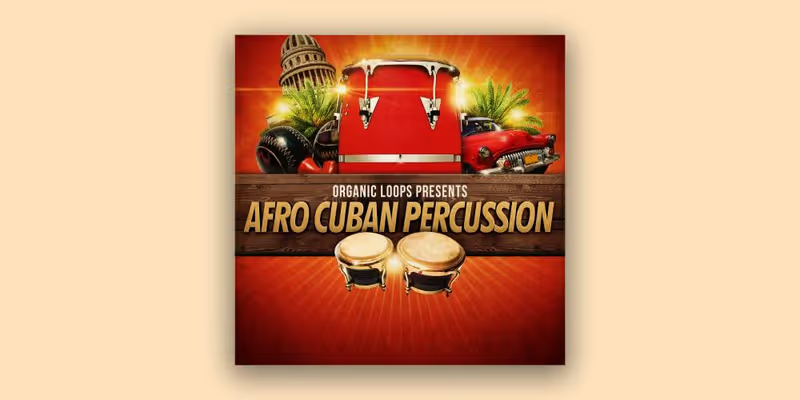
Afro Cuban Percussion 8.3
Format
WAV 24-bit
Content
Live conga, bongo, timbale loops
Requires
Any DAW
Format
WAV 24-bit
Content
Top loops, shakers, hand percussion
Requires
Any DAW
Latin Percussion 8.1
Format
Sampled instrument
Content
Multi-velocity round-robin hits
Requires
VST / AU host
Format
WAV 24-bit
Content
Surdo, pandeiro, agogo, cuica loops
Requires
Any DAW
Street Percussion
6. Street Percussion Big Fish Audio
8.0
Format
WAV 24-bit
Content
Found-object loops and hits
Requires
Any DAW
Format
ADpak expansion
Content
Multi-velocity percussion instruments
Requires
XLN Addictive Drums 2
Read more →

Methodology

Who is this for

Beat makers, sample-based producers, and electronic musicians who need reliable sounds and tools for finishing tracks fast.

Our testing process

We test every pack and plugin in actual beat sessions, from programming drum patterns to full arrangement and mixdown. We evaluate how tools perform in a dense mix, not in solo.

Why you should trust us

We buy most reviewed plugins ourselves. Occasionally we receive NFRs for evaluation, but this never guarantees a review or positive verdict. We may earn commissions from links, but our editorial choices are never for sale.

Also considered

For every category, we audition the top 8 to 15 options, discarding any that fail our usability test or deliver a low inspiration rate in a real session.

Top Picks

01 Frontline Producer

Studio Percussion

Best for Layering Percussion

Dry, tight, and mix-ready. The most practical percussion pack here and the least interesting to audition.

Tested score
8.4
out of 10

How it scored

  • Mix readiness 9.5

    Sits in a beat with no EQ required.

  • Transient clarity 9.5

    Attacks read clearly at low levels.

  • Loop and one-shot match 9.0

    Same session, so they layer cleanly.

  • Standalone character 5.5

    Flat and clinical when soloed.

Why we picked it

Best for producers layering percussion over programmed drums who need dry, close-miked material with sharp transients that needs no EQ to sit in a mix.

Who should skip it

Avoid if you want percussion with character or ambience on its own, because these recordings are deliberately flat and need your own processing.

The good

  • No room sound to clash with existing drums
  • Sharp transients survive a busy mix
  • Loops and one-shots match tonally
  • Needs no EQ before it sits

The bad

  • Flat and clinical when soloed
  • Competent rather than distinctive playing
  • Requires your own reverb for warmth
Format
WAV 24-bit
Content
Dry loops and one-shots
Requires
Any DAW
Tempo
80 to 130 BPM
License
Royalty-free
Price
$28
Why it scored that way

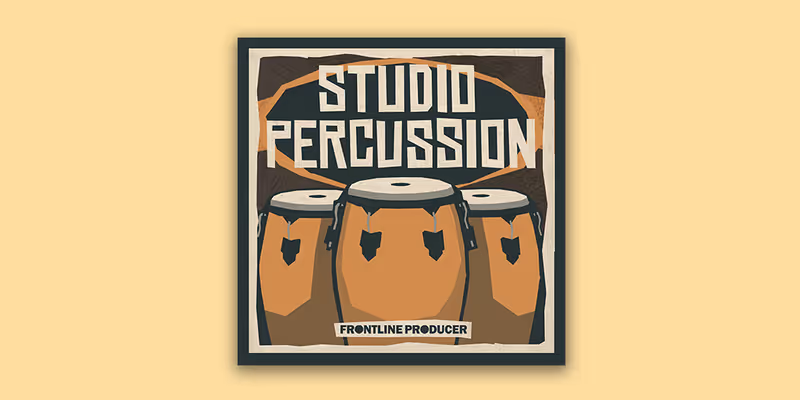
Studio Percussion is deliberately dry and tight, which makes it the easiest pack here to drop into an existing beat.

Most percussion libraries are recorded with room microphones because that is how percussion is usually captured. This one is not, and the difference matters enormously when you are layering over programmed drums. Close-miked and dry means no competing ambience, so a shaker loop sits behind a programmed hi-hat pattern without the two smearing into each other. I dropped a sixteenth shaker over the test pattern and it needed no EQ at all.

The transients are the other strength. Dry recordings preserve the attack, so each hit reads clearly even at a low level in a busy mix, which is precisely where roomier percussion disappears. Both loops and one-shots are supplied, so you can use a loop for the groove and place individual hits where you want an accent, and the two match tonally because they came from the same session.

The friction is that dry recordings are characterless on their own. Solo a loop and it sounds flat and slightly clinical, and getting warmth requires adding your own reverb or saturation. That is the correct trade for layering work but it means the pack is unrewarding to audition. The playing is competent rather than distinctive too, covering standard patterns without the rhythmic personality that the culturally specific packs on this list bring. At twenty-five dollars it is the most practical purchase here.
Heard on
Used for dry percussion layers over programmed drums Popular where room sound would clash with existing kit Referenced in Frontline Producer drum collections
Check price — $28
02 Organic Loops

Afro Cuban Percussion

Best for Hand Percussion

Genuine Afro-Cuban session playing across a full percussion section. Authentic, and it will not bend to your tempo.

Tested score
8.3
out of 10

How it scored

  • Rhythmic authenticity 9.5

    Patterns follow real playing logic.

  • Instrument coverage 9.0

    Congas, bongos, timbales, guiro, clave.

  • Value 9.0

    Session playing at twenty-five dollars.

  • Tempo flexibility 5.5

    Stretching creates transient artefacts.

Why we picked it

Best for producers who want authentic conga, bongo, and timbale patterns played by session musicians with rhythmic vocabulary that programming cannot reproduce.

Who should skip it

Avoid if your tempo is fixed and unusual, because hand percussion time-stretches badly and the loops commit to the groove they were played at.

The good

  • Real rhythmic vocabulary from session players
  • Full percussion section, tonally matched
  • Clave works well outside Latin contexts

The bad

  • Loops commit to their recorded tempo
  • Room sound can clash with dry kits
  • Time-stretching damages transients
Format
WAV 24-bit
Content
Live conga, bongo, timbale loops
Requires
Any DAW
Tempo
90 to 130 BPM
License
Royalty-free
Price
$28
Why it scored that way

Real players performing real patterns. The rhythmic vocabulary here is the thing you cannot get from a one-shot library.

Conga playing is a language, and programming it convincingly requires knowing which tone goes where and how the open and slap strokes alternate across a pattern. These are recordings of people who know that, so a conga loop carries a rhythmic logic that a producer placing hits on a grid would not arrive at. I layered one over the test pattern and it immediately made the beat feel like it had a second player rather than a second sample.

The instrument coverage is thorough and the recordings are clean enough to layer. Congas, bongos, timbales, guiro, and clave are all present, which means you can build a full percussion section with tonally matched parts rather than assembling one from different sources. The clave in particular is useful well outside Latin music, since a clave pattern under a hip-hop beat adds swing without sounding like a genre reference.

The friction is commitment. These are performances of specific patterns at specific tempos, so a loop that does not match your groove cannot be easily bent to fit, and time-stretching hand percussion introduces audible artefacts on the transients fast. There is also some room in the recordings, which is right for the instruments and can clash with a dry programmed kit. At twenty-five dollars it is very good value for genuine session playing.

Heard on
Performed by session percussionists Used for authentic conga patterns across genres Referenced in Organic Loops live percussion series
Check price — $28
03 Organic Loops

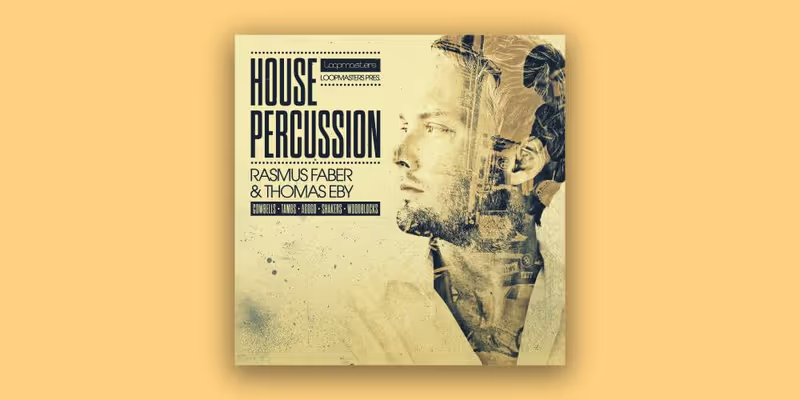
House Percussion - Rasmus Faber & Thomas Eby

Best for House Tops

Purpose-built house top loops with the processing already done. Locks in instantly, and only in one genre.

Tested score
8.0
out of 10

How it scored

  • Genre fit 9.5

    Locks to a four-on-the-floor kick immediately.

  • Processing 9.0

    Already compressed and filtered for club level.

  • Groove choices 9.0

    Swing and syncopation over straight sixteenths.

  • Versatility 4.5

    Sounds wrong outside house contexts.

Why we picked it

Best for house and tech house producers who want top loops and shakers already processed to sit forward against a four-on-the-floor kick pattern.

Who should skip it

Avoid if you make hip-hop or trap, because the rhythmic placement and processing both assume four-on-the-floor and cannot be undone.

The good

  • Purpose-built for four-on-the-floor patterns
  • Processing already correct for club playback
  • Groove choices from real house producers

The bad

  • Effectively unusable outside house
  • Heavy processing cannot be reversed
  • Narrow tempo range
Format
WAV 24-bit
Content
Top loops, shakers, hand percussion
Requires
Any DAW
Tempo
118 to 128 BPM
License
Royalty-free
Price
$28
Why it scored that way

This is percussion built for house rather than adapted to it, and the difference shows in how the loops interact with a straight kick.

House percussion has a specific job: to fill the space between four-on-the-floor kicks without competing with them. These loops were programmed and processed with that in mind, so the material sits in the offbeats and the upper midrange rather than crowding the downbeat. I layered a top loop over a straight kick pattern and it locked immediately, which rarely happens with general-purpose percussion.

The processing is already done, which is the right call for this genre. The loops are compressed and filtered so they sit forward in a mix the way house percussion should, and the shakers in particular have the tight, bright quality that reads correctly at club level. Having two established house producers behind the pack shows in the groove choices, which favour swing and syncopation over straight sixteenths.

The friction is genre lock-in. This is house percussion, and taken into a hip-hop or trap context it sounds wrong in a way that is hard to fix, because the processing and the rhythmic placement both assume a four-on-the-floor framework. The heavy processing also means you cannot pull it back toward something dry and natural. At twenty-five dollars it is well priced, and it is a purchase for people who make house rather than people who occasionally might.

Heard on
Produced by established house music producers Used for top loops in four-on-the-floor productions Referenced in Organic Loops genre-specific packs
Check price — $28
04 AudioThing

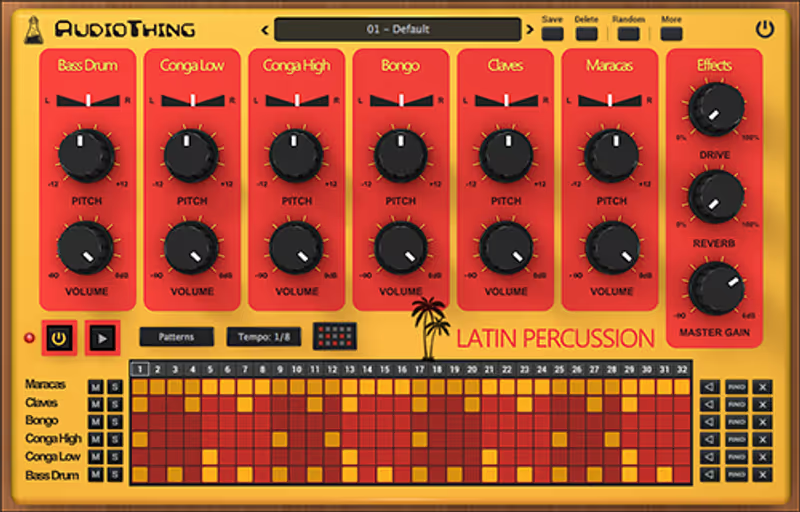
Latin Percussion

Best for Programmed Percussion

A playable round-robin percussion instrument. Full control over the pattern, and you have to earn the groove.

Tested score
8.1
out of 10

How it scored

  • Programmability 9.5

    Patterns follow your arrangement, not a loop.

  • Round-robin quality 9.0

    Repeated hits avoid the machine-gun effect.

  • Built-in mixing 8.5

    Balance and room without extra plugins.

  • Speed to groove 5.5

    Much slower than dropping in a loop.

Why we picked it

Best for producers who want to program their own percussion patterns with round-robin and velocity layers that avoid the machine-gun effect of single samples.

Who should skip it

Avoid if you do not already know what good percussion patterns look like, because the instrument will let you write rhythmically wrong parts.

The good

  • Full control over pattern and arrangement
  • Round-robins prevent mechanical repetition
  • Built-in mixer and effects
  • Works at any tempo without stretching

The bad

  • Requires percussion programming knowledge
  • Much slower than using loops
  • Narrow instrument selection
Format
Sampled instrument
Content
Multi-velocity round-robin hits
Requires
VST / AU host
Tempo
Any
License
Royalty-free
Price
$39
Why it scored that way

This is an instrument rather than a loop pack, so you program the patterns and the round-robins keep them from sounding mechanical.

The advantage of a playable instrument over loops is that the pattern is yours. You are not fitting a performance to your track, you are writing percussion that follows your arrangement, which matters when the groove changes between sections. The round-robin sampling is what makes this viable, because it cycles through several recordings of the same hit so repeated notes do not produce the identical sample twice in a row.

That machine-gun effect is the reason most programmed percussion sounds fake, and the round-robins plus multiple velocity layers largely fix it. I programmed a conga pattern over the test beat with velocity variation and it held up, sounding played rather than sequenced. The built-in mixer and effects let you adjust the balance between instruments and add room without loading separate plugins, which keeps the whole percussion section in one place.

The friction is that programming takes time and knowledge. You still need to know what a good conga pattern looks like, and the instrument will happily let you write something rhythmically wrong. Getting a result as convincing as the Afro Cuban loops took me considerably longer than dropping a loop in. It is also a specific set of Latin instruments rather than general percussion, so the coverage is narrower than the format suggests. At around twenty-two dollars it is strong value for a playable instrument.

Heard on
Used for programmed Latin percussion parts Popular where loop tempo lock is a problem Referenced in AudioThing instrument demonstrations
Check price — $39
05 Organic Loops

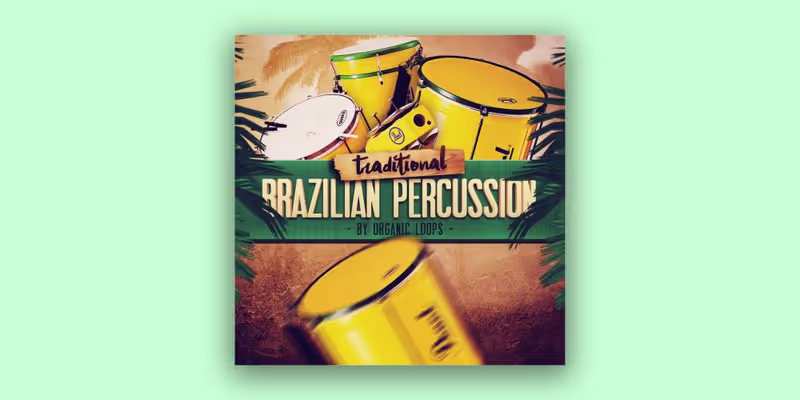
Traditional Brazilian Percussion

Best for Brazilian Percussion

Pandeiro and surdo are genuinely useful anywhere. The rest signals samba loudly whether you want it or not.

Tested score
8.0
out of 10

How it scored

  • Pandeiro value 9.5

    Fills several frequency ranges in one part.

  • Surdo pulse 9.0

    Adds physical push below the groove.

  • Playing quality 9.0

    Traditional patterns played properly.

  • Neutrality 4.5

    Agogo and cuica signal samba unavoidably.

Why we picked it

Best for producers who want pandeiro and surdo textures that fill space across several frequency ranges, and who are comfortable with strong Brazilian rhythmic signalling.

Who should skip it

Avoid if you need neutral percussion, because agogo and cuica in particular make a track sound like a samba reference regardless of context.

The good

  • Pandeiro covers several frequency ranges at once
  • Surdo adds pulse without fighting the kick
  • Authentic traditional playing

The bad

  • Strong unavoidable genre signalling
  • Room sound clashes with dry kits
  • Fast tempos often need half-timing
Format
WAV 24-bit
Content
Surdo, pandeiro, agogo, cuica loops
Requires
Any DAW
Tempo
100 to 140 BPM
License
Royalty-free
Price
$28
Why it scored that way

Brazilian percussion brings rhythms that nothing else on this list covers, and the pandeiro alone justifies the purchase.

The pandeiro is the most useful instrument here and the least known. It is a frame drum played with the fingers, thumb, and heel of the hand, producing a continuous rhythmic texture that combines a shaker, a tambourine, and a small drum in one part. Layering a pandeiro loop over the test pattern filled the space between the kick and snare more completely than a shaker would, because it operates across several frequency ranges at once.

The surdo is the other standout, a large low drum that sits underneath a groove and gives it a pulse without occupying the same range as a kick. Used carefully at low level it adds a physical push to a beat that is hard to achieve otherwise. The agogo bells and cuica are more specialised and read strongly as Brazilian, which is either exactly what you want or a problem depending on the track.

The friction is genre signalling. Several of these instruments are so strongly associated with samba that using them makes a track sound like a Brazilian reference whether you intended that or not, and there is no processing that removes the association. The recordings also carry room, which is appropriate for the instruments and awkward against dry programmed drums. The rhythms are fast, most sitting well above typical hip-hop tempos, so half-timing them is often necessary. At twenty-five dollars it is fair, and it is a specialist purchase.

Heard on
Recorded with traditional Brazilian percussionists Used for pandeiro texture in varied genres Referenced in Organic Loops world percussion series
Check price — $28
06 Big Fish Audio

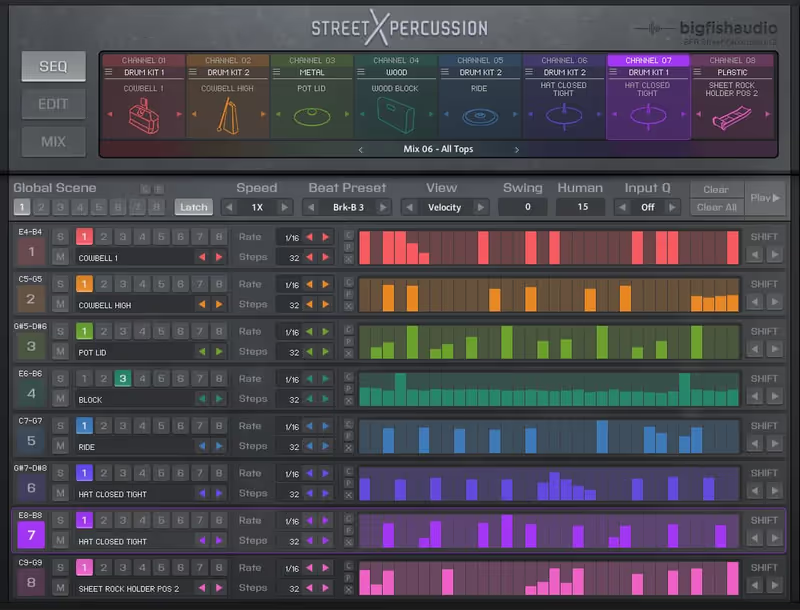
Street Percussion

Best for Gritty Percussion

Genuine found-object grit, recorded properly. Distinctive character at an uncomfortable price.

Tested score
8.0
out of 10

How it scored

  • Character 9.5

    Inconsistent hits with unpredictable overtones.

  • Recording quality 9.0

    Sharp transients despite the rough concept.

  • One-shot usefulness 9.0

    Single hits layer under snares controllably.

  • Value 4.5

    By far the most expensive pack here.

Why we picked it

Best for producers making raw, gritty hip-hop who want found-object percussion with inconsistent tuning and aggressive metallic texture under hard drum patterns.

Who should skip it

Avoid if you make polished R&B or house, and note the price is high for content this stylistically narrow.

The good

  • Genuinely distinctive found-object character
  • Recorded and captured properly
  • Individual hits layer well under snares

The bad

  • Very expensive for the content volume
  • No use in polished genres
  • Tuning inconsistency clashes with melodies
Format
WAV 24-bit
Content
Found-object loops and hits
Requires
Any DAW
Tempo
80 to 110 BPM
License
Royalty-free
Price
$199
Why it scored that way

Buckets, cans, and pipes recorded properly. This is the grittiest percussion here and the only pack with genuine urban texture.

Found-object percussion has a quality that studio instruments do not: the hits are inconsistent, slightly out of tune with each other, and full of unpredictable overtones. That is exactly what suits a raw hip-hop beat, and layering a bucket loop over the test pattern added an edge that a clean conga could not. The metal content in particular reads as aggressive in a way that works well under a hard drum pattern.

The recordings are better than the concept suggests. Big Fish Audio captured these properly rather than treating the rough concept as an excuse for rough sound, so the transients are sharp and the material sits in a mix without needing rescue. Both loops and individual hits are included, and the hits are the more useful half, since a single bucket sample layered under a snare adds grit far more controllably than a full loop does.

The friction is price. At around one hundred and forty dollars it is by a wide margin the most expensive pack here, and the content, while distinctive, is narrower than that money suggests. The character is also strongly directional, so a polished R&B or house track has no use for it at all. The tuning inconsistency that gives it personality also means the material can clash tonally with melodic elements, and there is no fix short of pitching individual hits.

Heard on
Recorded from found objects and street instruments Used for raw texture in hard hip-hop production Referenced in Big Fish Audio percussion collections
Check price — $199
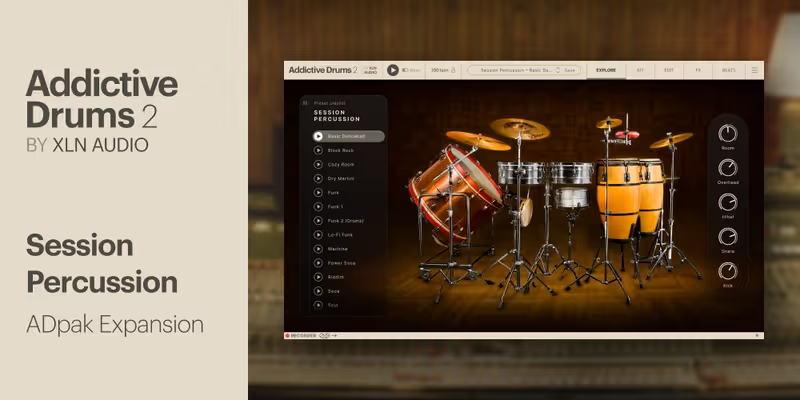
07 XLN Audio

Session Percussion ADpak

Best for AD2 Percussion

A percussion section inside the AD2 mixer. Excellent workflow for owners, worthless to everyone else.

Tested score
7.9
out of 10

How it scored

  • Workflow integration 9.5

    Percussion lives in the mixer you already use.

  • Microphone control 9.5

    Adjust room independently of the kit.

  • Velocity consistency 9.0

    Programmed parts convince without much editing.

  • Accessibility 3.5

    Requires Addictive Drums 2 to load at all.

Why we picked it

Best for existing Addictive Drums 2 users who want a full percussion section inside the same mixer with independent microphone channel control.

Who should skip it

Avoid if you do not own Addictive Drums 2, because the pack cannot be loaded at all without the host and the price excludes it.

The good

  • Sits inside the AD2 mixer and effects chain
  • Separate close and overhead microphone channels
  • Consistent velocity layers for convincing programming

The bad

  • Completely unusable without Addictive Drums 2
  • Conventional instrument selection with little character
  • Effective price is high for non-owners
Format
ADpak expansion
Content
Multi-velocity percussion instruments
Requires
XLN Addictive Drums 2
Tempo
Any
License
Royalty-free
Price
$89
Why it scored that way

If you already run Addictive Drums 2, this drops a full percussion section into the mixer you are already using.

The argument here is workflow rather than sound. Addictive Drums 2 gives you individual microphone channels, per-instrument processing, and a mixer you already know, and this expansion puts percussion inside that same environment rather than in a separate plugin. Balancing a shaker against the kit becomes one mixer move instead of a routing exercise, and the built-in effects apply consistently across both.

The sampling is thorough, with multiple velocity layers and separate close and overhead microphone channels, so you can adjust how much room the percussion carries independently of the kit. I pulled the overheads down on the percussion and left the kit ambient, which is a level of control that loop packs simply cannot offer. The playing across the velocity layers is consistent, and programming a part sounds convincing without much velocity editing.

The friction is the host requirement, and it is a big one. This is useless without Addictive Drums 2, so the eighty-nine dollar price is really eighty-nine dollars on top of the host if you do not already own it. The percussion selection is also fairly conventional, covering shakers, tambourines, congas, and blocks without any of the character that the found-object or traditional packs bring. It is a sensible purchase for existing AD2 users and a poor entry point for anyone else.

Heard on
An expansion for the Addictive Drums 2 platform Used for percussion inside existing AD2 workflows Referenced in XLN Audio expansion demonstrations
Check price — $89

What didn’t make the list

3 cut
  • World Percussion Carnival Organic Loops

    Broad and well recorded, but it spreads across so many traditions that no single style goes deep enough to be the pack you reach for repeatedly.

  • Little Epic Percussion Soundiron

    Big cinematic hits recorded well, though trailer-style percussion is the wrong register for beat making and would sit unused in most sessions.

  • Indian Sessions Percussion Vol. 3 Loopmasters

    Genuinely excellent tabla and hand drum playing, but it is specialised enough that we gave the slot to packs covering more common beat-making needs.

Frequently Asked Questions

Where should percussion sit in the stereo field?

Away from centre, because the kick, snare, and bass already own that space. Panning a shaker to one side and a tambourine to the other creates width and keeps the middle clear. Anything you pan hard should have a quieter counterpart on the other side so the balance does not pull.

How do I stop percussion cluttering my beat?

High-pass everything above roughly 200Hz so it carries no low end, and keep the level lower than feels right when soloed. Percussion should be felt rather than heard in most beats. If you can pick it out easily while the full mix plays, it is probably too loud.

Should I use percussion loops or one-shots?

Loops if you want the groove of a real player, which is hard to program convincingly. One-shots if you want the pattern to lock exactly to your existing drums or to sit in a specific rhythmic pocket. Many producers use a loop for feel and add one-shots to accent particular moments.

What percussion works in trap and drill?

Less than you might expect. Trap and drill lean on hi-hat programming rather than hand percussion, so shakers and light tambourine work while congas usually feel wrong. When percussion is used it tends to be sparse and heavily filtered, sitting well back behind the hats.

Written By

Marcus Vega

Marcus is a hip-hop producer and drum programmer based in Atlanta. He builds beats for independent rappers, licenses tracks through BeatStars, and has been in the top 500 producers on the platform for three years. He judges every sample pack by one question: does it help him finish a beat faster?