

Best MIDI Chord Packs for Beat Makers (2026)

If every beat you make uses the same four chords in the same order, the problem is not your sample pack. MIDI chord packs are the cheapest way to borrow voicings from people who studied this properly.

We buy most of what we test. When you buy through a link on this page we may earn a commission, which never affects our picks or verdicts. How we work.

Jada Osei
By Jada Osei

Pick one in 10 seconds

Short version

Compare all 7

Deep House Chords
1. Deep House Chords Frontline Producer Best for House Progressions
9 /10
House & Techno Chords
2. House & Techno Chords Loopmasters Best for Broad Coverage
9 /10
Deep House MIDI Weapons
3. Deep House MIDI Weapons Resonance Sound Best for Matched MIDI
8 /10
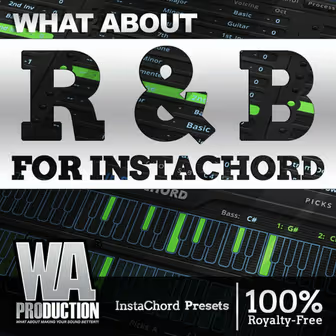
R&B for Instachord
4. R&B for Instachord W. A. Production Best for R&B Harmony
8 /10
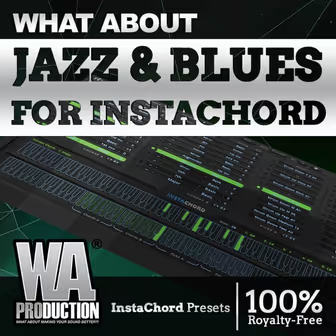
Jazz & Blues for Instachord
5. Jazz & Blues for Instachord W. A. Production Best for Jazz Turnarounds
8 /10
Ableton Chord Rack - Blue Notes & Borrowed Chords
6. Ableton Chord Rack - Blue Notes & Borrowed Chords Loopmasters Best for Borrowed Chords
7 /10
7. InstaChord W. A. Production Best for Live Chords
9 /10

Harmony is where most self-taught producers hit a wall. You can learn drum programming by ear in a few months, and you can learn mixing from tutorials, but chord voicing is genuinely difficult to pick up without either lessons or a lot of transcription. The result is thousands of beats built on the same four root position minor triads, which is why so much bedroom production sounds harmonically flat next to a record made by someone who plays.

How we picked

Every pack was loaded against the same Rhodes and piano instruments and judged on four things: whether the voicings went beyond root position triads, how accurately each progression represented the genre it claimed, how easily the MIDI could be edited and re-voiced, and how much a producer would actually learn about harmony from using it. How we work →

Top Picks

Deep House Chords by Frontline Producer
01 Frontline Producer

Deep House Chords

Best for House Progressions Our rating 9/10
$34 at Plugin Boutique
View price

Genuine deep house extended voicings in MIDI and audio. Accurate to the genre, and locked to it.

The good

  • Extended voicings done correctly for the genre
  • Audio renders speed up auditioning
  • MIDI works with any instrument you own

The bad

  • Strong house character resists transfer
  • Fewer distinct ideas than file count suggests
  • Narrow tempo and genre focus
Format
MIDI and WAV
Content
Deep house chord progressions
Requires
Any DAW
Genre
Deep house
License
Royalty-free
Why we rated it that way

Our rating, by criterion

  • Voicing quality 9.5

    Extensions placed inside the chord, not stacked.

  • Genre accuracy 9.5

    Real deep house harmony, not triads on a pad.

  • Format flexibility 9.0

    MIDI and audio renders both supplied.

  • Variety 6.5

    Several progressions repeat similar movements.

Why we picked it

Best for deep house producers who want authentic extended chord voicings with sevenths and ninths placed correctly, supplied as both MIDI and audio.

Who should skip it

Avoid if you make hip-hop or trap, because the harmonic character reads strongly as house even when the MIDI is transposed elsewhere.

Deep house lives on extended chords, and this pack gets the voicings right rather than stacking triads and calling it deep.

The genre distinction matters here. A lot of packs labelled deep house contain ordinary minor progressions played on a pad, which misses what the genre actually does.

Real deep house harmony is built on sevenths, ninths, and occasionally elevenths, with the extensions voiced in the middle of the chord rather than piled on top. These progressions do that, and loading one into a Rhodes produced the lush, slightly unresolved quality the style depends on.

Getting both MIDI and audio renders is more useful than it sounds. The audio lets you hear the intended sound immediately and judge whether a progression fits before committing, and the MIDI lets you rebuild it with your own instrument. I used the audio to audition quickly, then took the MIDI of the two progressions I liked into a different keyboard sound entirely.

The friction is genre lock. These are deep house progressions at deep house tempos, and while the MIDI transposes anywhere, the harmonic character carries a strong house association that does not always transfer to hip-hop.

Several progressions are also variations on similar harmonic movements, so the genuinely distinct ideas are fewer than the file count implies. At twenty-nine dollars it is reasonable, and it is a focused purchase rather than a general one.
Check price — $34
House & Techno Chords by Loopmasters
02 Loopmasters

House & Techno Chords

Best for Broad Coverage Our rating 9/10
$20 at Plugin Boutique
View price

Wide house and techno coverage with genuinely useful stab rhythms. Conventional voicings, strong value.

The good

  • Covers three related genres in one pack
  • Rhythmic stab patterns save real programming time
  • Clear naming speeds up auditioning

The bad

  • No audio renders included
  • Conventional voicings throughout
  • No genre covered deeply
Format
MIDI
Content
Stabs, pads, rhythmic patterns
Requires
Any DAW
Genre
House and techno
License
Royalty-free
Why we rated it that way

Our rating, by criterion

  • Value 9.5

    Three genres covered for nineteen dollars.

  • Rhythmic patterns 9.0

    Stab rhythms are hard to program and included.

  • Organisation 9.0

    Clear key and style naming throughout.

  • Harmonic depth 6.5

    Conventional voicings with few surprises.

Why we picked it

Best for producers who want broad house and techno chord coverage including rhythmic stab patterns, with clean well-named MIDI at a low price.

Who should skip it

Avoid if you want harmonic depth or surprises, because the voicings are conventional and the breadth comes at the cost of going deep on any one style.

Broad coverage at a low price. This is the pack to buy if you want options rather than one specific sound.

Where the Frontline pack goes deep on one style, this goes wide across several. House, tech house, and techno are represented with progressions suited to each, and crucially the pack includes rhythmic chord patterns as well as sustained ones. Those rhythmic stabs are the more useful half, because a chord pattern with syncopation gives a track motion in a way a held pad cannot, and programming convincing stab rhythms is genuinely difficult.

The MIDI is clean and well-organised, with clear naming that tells you the key and the style, which saves a lot of time when auditioning. I dragged several patterns onto a pluck sound in sequence and found something usable within a few minutes. The techno material is simpler harmonically, as the genre demands, and that restraint is correct rather than a shortcoming.

The friction is depth. Covering three related genres in one nineteen dollar pack means none of them is covered as thoroughly as a dedicated release, and the voicings are more conventional than the deep house pack offers. A producer who already understands house harmony will find few surprises.

There is also no audio included, so every progression has to be loaded into an instrument before you can judge it, which slows auditioning. At nineteen dollars the value is still strong.

Check price — $20
Deep House MIDI Weapons by Resonance Sound
03 Resonance Sound

Deep House MIDI Weapons

Best for Matched MIDI Our rating 8/10
$15 at Plugin Boutique
View price

Matched chords, bass, and melody MIDI for eight dollars. Real filler in the mix, and worth digging through.

The good

  • Bass MIDI written to match the chords
  • Large volume of material for the price
  • Organised by key for easy combination

The bad

  • Noticeable filler among the good progressions
  • Simpler voicings than dedicated packs
  • Unclear naming slows auditioning
Format
MIDI
Content
Chords, bass, and melody parts
Requires
Any DAW
Genre
Deep house
License
Royalty-free
Why we rated it that way

Our rating, by criterion

  • Matched parts 9.5

    Bass written against the chords, not separately.

  • Value 9.5

    Substantial MIDI volume at eight dollars.

  • Key organisation 8.5

    Combining across sets is straightforward.

  • Consistency 5.5

    Filler sits alongside the good material.

Why we picked it

Best for producers who want chord, bass, and melody MIDI written to match each other, organised by key, at a price that makes auditioning worthwhile.

Who should skip it

Avoid if you want consistently high quality throughout, because the volume-focused approach means real filler sits alongside the good progressions.

This gives you chords, bass, and melody as matched MIDI, which solves the problem of a good progression with nothing under it.

The matched-parts approach is the differentiator. Most chord packs give you chords and leave you to write a bass line, which is where a lot of producers come unstuck because the bass has to imply the harmony without doubling it. Here the bass MIDI is written against the chord MIDI, so dropping both in produces a coherent harmonic foundation rather than two parts fighting.

The melodic parts are the third piece and the least essential, though having a lead line that sits correctly against the harmony is useful for sketching. Everything is organised by key, so combining a progression from one set with a bass from another is straightforward as long as you match keys. At around eight dollars the volume of usable MIDI is substantial.

The friction is quality variation. Because this is a volume-focused release, some progressions are genuinely good and others are filler that reuses common movements, so getting value means auditioning through a fair amount of material. The voicings are simpler than the Frontline deep house pack offers, sitting closer to triads with occasional sevenths rather than full extended harmony.

The naming is also less clear, which slows the auditioning that the variable quality makes necessary. At the price these are fair complaints rather than serious ones.

Check price — $15
R&B for Instachord by W. A. Production
04 W. A. Production

R&B for Instachord

Best for R&B Harmony Our rating 8/10
$9 at Plugin Boutique
View price

Sophisticated R&B voicings under one finger, and a fast harmony lesson. Useless without the host plugin.

The good

  • Genuine extended and altered R&B voicings
  • Teaches rootless voicing through visible MIDI
  • Very cheap alongside the host plugin

The bad

  • Requires InstaChord to function
  • Limited to the voicings the author chose
  • Sophisticated chords clash with simple basslines
Format
InstaChord preset
Content
R&B extended voicings
Requires
W. A. Production InstaChord
Genre
R&B
License
Perpetual
Why we rated it that way

Our rating, by criterion

  • Voicing sophistication 9.5

    Extended and altered chords done correctly.

  • Teaching value 9.5

    Visible MIDI explains rootless voicings.

  • Value with host 9.0

    Ten dollars if you already own InstaChord.

  • Standalone usability 3.0

    Cannot load without InstaChord at all.

Why we picked it

Best for InstaChord owners who want authentic R&B extended and altered voicings mapped to single keys, including rootless chords that are hard to construct by ear.

Who should skip it

Avoid if you do not own InstaChord, because the expansion cannot load standalone and the effective price is the host plus the pack.

This maps proper R&B extended harmony to single keys, which means playing sophisticated chords without knowing what they are.

R&B harmony is the hardest thing on this list to fake. It relies on extended and altered chords, on voicings that omit the root, and on movements between chords that do not follow simple diatonic rules, all of which are difficult to arrive at by ear. This expansion maps those voicings onto InstaChord's single-key system, so pressing one key produces a correctly voiced eleventh chord that would take real knowledge to construct.

Using it against a Rhodes immediately produced progressions that sounded like R&B rather than like pop with extra notes. The value compounds with InstaChord's visible MIDI output, because you can play a progression that sounds right and then examine which notes made it right, which is the most efficient harmony lesson available at this price. I learned more about rootless voicings in an hour with this than from several tutorials.

The friction is the dependency. This is useless without InstaChord, so the ten dollar price is only real if you own the host, and the combined cost is closer to forty. The mapping also means you are limited to the voicings the pack author chose, so you cannot easily get a variation that is not included.

Because the chords are sophisticated, they can sound wrong over simple basslines that assume triadic harmony. At ten dollars alongside the host it is excellent value.

Check price — $9
Jazz & Blues for Instachord by W. A. Production
05 W. A. Production

Jazz & Blues for Instachord

Best for Jazz Turnarounds Our rating 8/10
$9 at Plugin Boutique
View price

Jazz turnarounds and passing chords under one finger. The best expansion for lo-fi, and it demands a moving bass.

The good

  • Passing chords and turnarounds mapped to keys
  • Directly useful for lo-fi and boom bap
  • Dominant voicings carry genuine tension

The bad

  • Requires InstaChord to function
  • Demands moving bass to make sense
  • Complex chords too busy for sparse beats
Format
InstaChord preset
Content
Jazz and blues voicings
Requires
W. A. Production InstaChord
Genre
Jazz and blues
License
Perpetual
Why we rated it that way

Our rating, by criterion

  • Harmonic movement 9.5

    Passing chords and turnarounds included.

  • Lo-fi relevance 9.5

    Directly addresses jazz-influenced harmony.

  • Value with host 9.0

    Ten dollars on top of InstaChord.

  • Standalone usability 3.0

    Requires InstaChord to load.

Why we picked it

Best for lo-fi and boom bap producers who want jazz turnarounds, dominant sevenths, and diminished passing chords available under single keys.

Who should skip it

Avoid if your bass lines are static, because jazz voicings assume moving bass and sound incoherent over a held 808.

Jazz turnarounds and diminished passing chords mapped to keys. This is the most useful expansion for lo-fi producers.

Jazz harmony is the foundation of lo-fi and boom bap, and the specific things that make it sound like jazz are the passing chords rather than the destinations. A diminished chord moving between two stable ones, or a two-five-one turnaround at the end of a phrase, are what separate a jazz-influenced progression from a plain minor one. Those movements are mapped here, which means you can play a turnaround without knowing what a turnaround is.

Against a Rhodes this produced exactly the harmonic character lo-fi depends on, and the dominant seventh voicings in particular had the slight tension that makes a progression want to move. Combined with InstaChord's rhythm controls, playing a jazz progression with a loose strummed feel took under a minute. For a lo-fi producer whose harmony has plateaued, this is the most direct fix on this list.

The friction is the same host dependency as the R&B expansion, plus a subtler problem: jazz voicings assume a certain kind of bass movement, and dropping them over a static 808 sounds incoherent. You have to write the bass to match, which is more work than the plugin suggests.

Some of the more complex chords are also too busy for a sparse lo-fi beat and need notes removed. At ten dollars it is the expansion I would buy first.

Check price — $9
Ableton Chord Rack - Blue Notes & Borrowed Chords by Loopmasters
06 Loopmasters

Ableton Chord Rack - Blue Notes & Borrowed Chords

Best for Borrowed Chords Our rating 7/10
$9 at Plugin Boutique
View price

Music theory built into Ableton racks. Genuinely clever for Ableton users, and completely useless outside it.

The good

  • Theory built into the instrument itself
  • Macro control over harmonic variation live
  • Produces progressions you would not write

The bad

  • Unusable outside Ableton Live
  • Needs rack knowledge to modify
  • More educational than immediately practical
Format
Ableton instrument racks
Content
Borrowed chord and blue note generators
Requires
Ableton Live
Genre
Neutral
License
Royalty-free
Why we rated it that way

Our rating, by criterion

  • Concept 9.5

    Borrowed chord theory built into the device.

  • Ableton workflow 9.0

    Macros sit in the interface you already use.

  • Value for owners 8.5

    Eight dollars for a genuinely novel idea.

  • Accessibility 2.5

    No other DAW can open these files.

Why we picked it

Best for Ableton Live users who want borrowed chords and blue note harmony generated as they play, with macro controls for real-time harmonic variation.

Who should skip it

Avoid entirely if you do not use Ableton Live, because these are instrument racks that no other DAW can open in any form.

These are Ableton racks that generate borrowed chords as you play, which is theory built into the instrument rather than written down.

Borrowed chords are taken from a parallel key, so a minor progression borrowing from the major gives you a chord that sounds unexpected but still resolves. That device is behind a lot of memorable progressions and it is hard to use deliberately without theory knowledge. These racks build the borrowing into the instrument, so playing within a scale produces harmony that steps outside it in musically sensible ways.

Working with them inside Ableton is genuinely fast, because they are racks rather than plugins, so the macro controls sit in the same interface you already use and everything is visible in the device chain. I mapped a macro to a controller knob and moved between diatonic and borrowed harmony while playing, which produced progressions I would not have written deliberately. The blue note material similarly adds the flattened intervals that give blues and soul harmony its character.

The friction is total platform lock. These are Ableton racks, so FL Studio, Logic, and every other DAW cannot open them at all, which rules out most of the market immediately. Even within Ableton they require a reasonable understanding of racks and MIDI effect chains to modify beyond the macros.

The concept is also more educational than practical, since the results need editing to fit a specific track. At eight dollars for Ableton users it is an interesting purchase and for everyone else it is nothing.

Check price — $9
07 W. A. Production

InstaChord

Best for Live Chords Our rating 9/10
Price on site at Plugin Boutique
View price

A one-finger chord tool that generates visible MIDI you can learn from. The best purchase on this list.

The good

  • Play full voicings from single keys
  • Generated MIDI teaches chord construction
  • Strum and rhythm controls humanise timing
  • Cheap for a tool you use permanently

The bad

  • MIDI effect routing is awkward in some DAWs
  • Dense interface takes a session to learn
  • Genre voicings require paid expansions
Format
MIDI effect plugin
Content
Chord engine and playing modes
Requires
VST / AU host with MIDI effects
Genre
Neutral
License
Perpetual
Why we rated it that way

Our rating, by criterion

  • Teaching value 9.5

    Generated MIDI shows how voicings are built.

  • Speed of ideas 9.5

    Try a progression in seconds, not minutes.

  • Timing humanisation 9.0

    Strum controls avoid rigid quantised chords.

  • Interface clarity 6.0

    Two keyboard rows and dense controls.

Why we picked it

Best for producers who want to play chord progressions in real time from single keys and learn voicing by examining the MIDI the plugin generates.

Who should skip it

Avoid if you dislike MIDI effect routing or want genre-specific voicings immediately, because the base plugin is neutral and needs expansions.

InstaChord is a tool rather than a library, and it teaches more about voicing than any pack of finished progressions.

The concept is simple and the execution is good. One row of keys triggers chords, another row controls how those chords are played, so you can hold a single note and strum, arpeggiate, or apply a rhythmic pattern to a full voicing in real time. Playing a progression became a matter of choosing chords rather than placing individual notes, which changed how quickly I could try harmonic ideas.

What makes it educational rather than merely convenient is that the output is visible MIDI. You play the progression with one finger, then look at what was actually generated and see how the voicing was constructed, which notes were doubled, and where the inversions fell.

Over a few sessions that builds real understanding, in a way that dragging in a finished MIDI file never does. The strum and rhythm controls also solve the quantised-chord problem automatically by introducing small timing offsets.

The friction is that it is a MIDI effect, so it sits before an instrument and adds a step to your routing, and some DAWs handle MIDI effects awkwardly. The interface is dense with two keyboard rows and a lot of small controls, and it takes a session to become comfortable with what triggers what.

The expansion model also means the base plugin is genre-neutral, so getting specific voicings means buying packs on top. At under thirty dollars it is the best purchase here.

Check price

Before you buy

MIDI chord packs are the shortcut, and unlike audio loops they are worth buying because MIDI is fully editable. A progression that is nearly right can be transposed, re-voiced, re-timed, or stripped down to the two chords you liked, and you can load it into any instrument you own. We tested each of these against the same Rhodes and piano, asking whether the voicings went beyond triads, whether the progressions genuinely represented their claimed genre, how easily the MIDI edited, and how much a producer would actually learn from working through them.

There is a real division here between libraries of finished progressions and tools that generate chords as you play, and they solve different problems. If you would rather have the performance than the notes, the piano loop packs cover that, and understanding what the voicings are doing is what turns a purchase like this into a permanent improvement.

What didn’t make the list

3 cut
  • Power House Chords Loopmasters

    Solid progressions with usable voicings, but it covers ground the broader House & Techno Chords pack already handles, so buying both would be redundant.

  • EDM MIDI Weapons 1.0 Resonance Sound

    Well-built MIDI aimed at festival EDM, though the voicings are simpler and more anthemic than the harmonic depth this list was looking for.

  • Jazz & Blues 2 for Instachord W. A. Production

    A good second volume, but the first covers the essential jazz vocabulary and there is little reason to buy the sequel before you have used volume one.

Frequently Asked Questions

Are MIDI chord packs cheating?

No more than using a sample pack is. The MIDI is a starting point that you transpose, re-voice, and edit into your own progression, and the notes themselves are not copyrightable in the way a recording is. Most producers who use them end up learning the voicings and writing their own within a year.

What is chord voicing and why does it matter?

Voicing is how the notes of a chord are arranged and spaced, not which chord it is. The same C minor seventh sounds thin in root position and rich with the seventh in the bass and the third up an octave. Voicing is most of the difference between amateur and professional-sounding harmony.

Can I use MIDI chord packs in any DAW?

Plain MIDI files work everywhere, so you can drag them into FL Studio, Ableton, Logic, or anything else and load any instrument. The exceptions on this list are the InstaChord expansions and the Ableton racks, which need their specific host to function at all.

How do I make a MIDI progression sound less generic?

Change the voicing rather than the chords. Invert the middle chord, drop the root out and let the bass imply it, or move one note up an octave. Adjusting timing so chords land slightly before or after the beat also helps, because rigidly quantised chords are the clearest sign of programmed harmony.

Written By

Jada Osei

Jada makes lo-fi beats, boom bap, and chill hop. She samples vinyl, builds beats on an SP-404 and in Ableton, and runs a YouTube beat-making channel with over 50K subscribers. She values vibe over perfection and believes the best sample packs sound like they were found, not manufactured.