
Do This Now
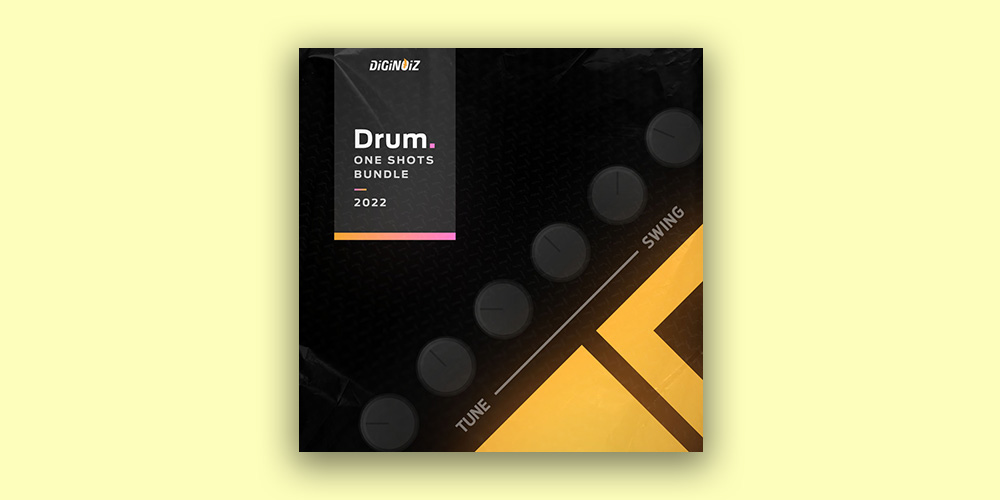
- 1 A sample pack is a folder of ready-made sounds you build beats from. A beat pack usually means finished instrumentals for artists.
- 2 Loops are ready-made musical phrases. One-shots are single hits you program yourself.
- 3 Royalty-free means you can release music made with the sounds. It does not let you share or resell the raw files.
- 4 Read the license in every download, free packs most of all.
- 5 Audition sounds from your DAW browser with the beat playing, and pick loops close to your project tempo.
- 6 Two packs you know deeply beat fifty you have never opened.
Watch the technique in action, then read on for the details.
If you are just starting to make beats, the phrase sample pack gets thrown around constantly and nobody stops to define it. The short version is that it is a folder of ready-made, royalty-free sounds you drop into your own beats. Here is what is inside one, what the license lets you do, and how to load it.
Do not confuse it with a beat pack. A beat pack usually means a set of finished instrumentals a producer sells or sends to artists to record over. The annoyance is that some stores call drum kits beat packs too, so read the file list before you pay.
The Two Kinds of Samples
Almost everything inside a pack falls into one of two categories.
Loops are short musical phrases, a few bars of drums, a melody, or a bassline, that repeat cleanly. You drop one in and it plays as finished music you can build around.
One-shots are single hits, one kick, one snare, one bass note, that you arrange yourself to create your own patterns.
- Loops
- Fast starting point, less control
- One-shots
- Full control, more work
- Most producers
- Use both together
- Loop labels
- Should list key and tempo
Loops get you moving fast. One-shots give you control. The catch with loops is that every other buyer owns the same ones, so a melody loop used untouched can turn up in somebody else's beat.
What Is Actually Inside a Pack
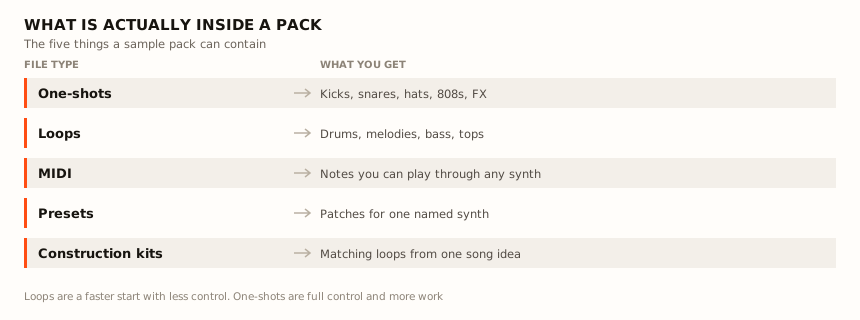
Unzip a download and you usually find a folder tree split by sound type. A typical hip-hop pack holds drum one-shots, drum loops, melody loops, MIDI files and sometimes synth presets.
- One-shots
- Kicks, snares, hats, 808s, FX
- Loops
- Drums, melodies, bass, tops
- MIDI
- Notes you can play through any synth
- Presets
- Patches for one named synth
- Construction kits
- Matching loops from one song idea
Construction kits are the part beginners misread. Each kit is a set of separate loops (drums, bass, keys, lead) cut from one song idea, all in the same key and tempo, so they stack without fighting. MIDI files carry the notes but no sound, which is why MIDI chord packs are so easy to rework.
Good packs put the tempo and key in the filename, something like Dusty_Keys_90_Cm.wav. The friction is that nobody enforces a standard. Some packs hide the key in a text file, some skip labels on drum loops, and a preset folder is useless unless you own the synth it was built for.
Why Producers Use Them
You could record or design every sound yourself, but that takes years of skill and a lot of gear.
Sample packs let you use professionally recorded, mix-ready sounds from day one. A good pack means you spend your time making music instead of fighting to get a decent kick drum.
The quality varies wildly though. A strong pack drops into your session and works. A weak one is full of filler you will never touch.
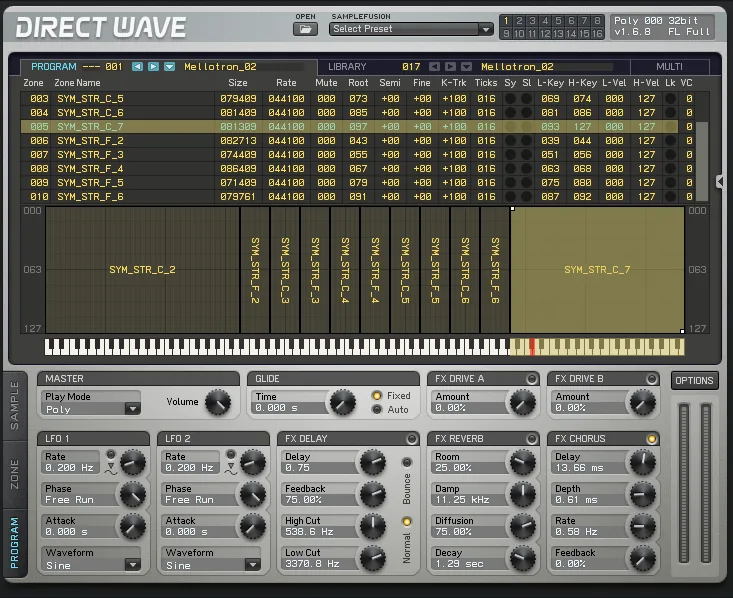
A sampler is where one-shots end up once a pack is unzipped, mapped across the keyboard. Screenshot courtesy of Image-Line.
Are Samples Free? Royalty-Free Licensing Basics
Royalty-free does not mean free to download. It means you pay once, or nothing for a free pack, and can then use the sounds in your own music, including releases you sell and stream, without paying the maker a share.
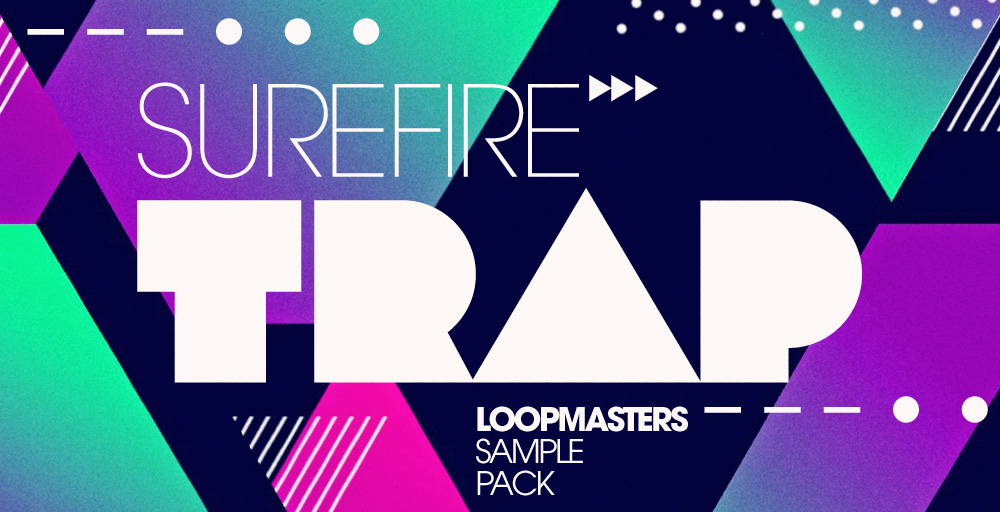
The usual exception is redistribution. The Loopmasters license, for example, forbids reselling the samples, uploading them to shared server space or using them in a competing product, and Splice bars distributing its sounds as samples or loops. The sounds have to live inside a new piece of music.
- Usually allowed
- Beats you sell, releases, streaming
- Usually banned
- Sharing or reselling the raw files
- Not covered
- Samples lifted from existing songs
- Before you release
- Read the license in the download
The friction is that every license is a little different, and free packs carry the most risk. Some free downloads are re-uploads of paid packs the uploader had no right to share, so skip anything that arrives without a license. For the full money question, see free vs paid sample packs.
How to Audition and Load a Pack in Your DAW
Unzip every pack into one samples folder and add that folder to your DAW's browser, which FL Studio and Ableton Live both let you do. Then audition sounds from the browser while your beat plays, so you judge each one in context instead of solo.
Drag a loop onto an audio track and it plays. For one-shots, load them into a sampler or drum instrument (the Channel Rack or FPC in FL Studio, a Drum Rack in Ableton), assign them to pads, then program a pattern.
- Loops
- Audio track, synced to project tempo
- One-shots
- Sampler, drum rack or pads
- Audition
- In context, with the beat playing
- Library
- One folder, added to the browser
Check the labeling. Loops are usually tagged with tempo and key, and that matters more than beginners realize. A melody loop tagged with the wrong key wastes your time on every single beat.
The other friction is time-stretching. A 90 BPM loop dragged into a 140 BPM session gets stretched hard and starts to warble, so pick loops close to your tempo or use the half-time trick of a 70 BPM loop under a 140 BPM trap beat.
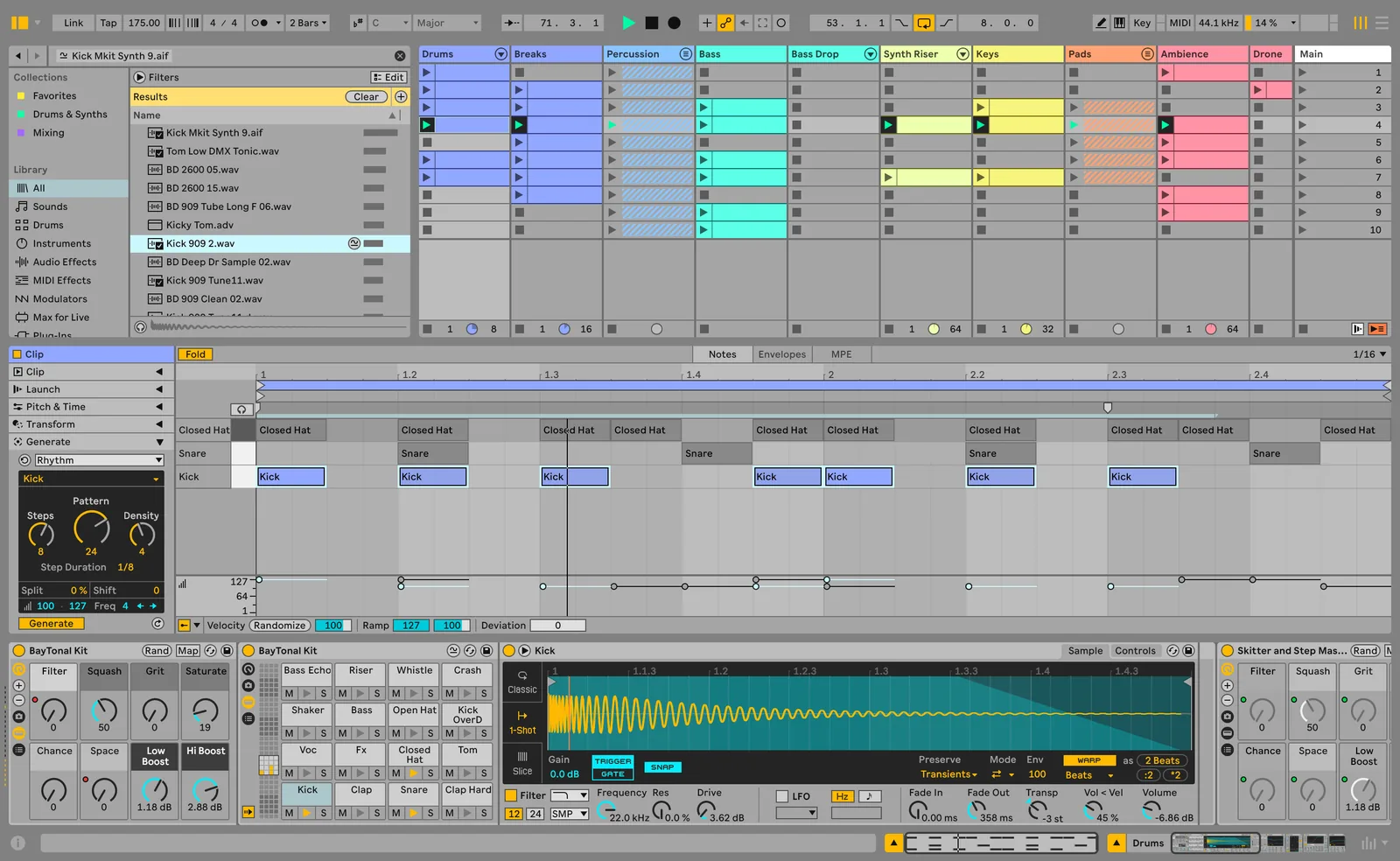
One-shots sitting in a drum rack, with the browser auditioning kicks against the beat on the left. Screenshot from the Ableton Live 12 press kit, courtesy of Ableton AG.
Match the Pack to Your Genre
There is no universal best pack.
A dusty lo-fi kit and a hard-hitting trap kit are built for completely different music. Start by buying packs that match the style you actually want to make. If you love warm, mellow beats, a textured lo-fi pack gives you the right foundation immediately.
For trap and drill, spend on drums and 808 sample packs first. For boom bap and soul flips, melody loops do more of the work.
The trap is the demo track. It has been mixed and mastered, and the raw files you download will sound smaller next to it.
Start Small
You do not need fifty packs.
Start with one or two solid kits in your genre, learn every sound inside them, and make beats. A small, well-chosen library you know deeply beats a huge folder of sounds you have never opened. The goal is finished music, and a couple of good packs gets you there.
Frequently Asked Questions
What is a sample pack?
A sample pack is a collection of pre-recorded sounds, usually drum one-shots, loops, MIDI files and sometimes synth presets, sold or given away for producers to use in their own music. Most come with a royalty-free license.
What does beat pack mean?
A beat pack usually means a set of finished instrumentals that a producer sells or sends to artists to record over. Some stores also use the term for drum kits, so check the file list to see if you are getting raw sounds or full beats.
What is the difference between a loop and a one-shot?
A loop is a short musical phrase of a few bars that repeats cleanly, like a drum groove or a melody. A one-shot is a single hit, such as one kick or one snare, that you arrange yourself into your own pattern.
Are samples free to use?
Sounds from a royalty-free sample pack, paid or free, can usually go into your releases without paying royalties, as long as you follow the pack's license. Samples lifted from existing songs are different and need clearance from the rights holders.
What does royalty-free mean for samples?
You pay once, or nothing for a free pack, and can then use the sounds in your own music, including commercial releases, without paying the maker a share of your earnings. The usual exception is that you cannot redistribute or resell the samples on their own.
What is the difference between free and paid samples?
Mostly curation and consistency. Paid packs tend to be quality-checked, evenly leveled and labeled with key and tempo, while free packs vary widely and take longer to sort. Our free vs paid sample packs guide covers the trade-off in depth.
Is it worth paying for samples?
It is worth paying for the category you use in almost every beat, usually drums and 808s, once free sounds stop covering it. Buying packs for genres you rarely finish is where the money gets wasted.
Are sample packs cheating?
No. Nearly every professional producer uses them. Recording and designing every sound yourself takes years of skill and a lot of gear, and sample packs let you use professionally recorded sounds from day one.
Related Articles
Best 808 Sample Packs & Drum Kits for Beat Makers (2026)
808 drum kits and sample packs compared on tuning stability, sub weight, and slide behavior, with load notes for FL Studio, Ableton, and Logic.
Best Hip-Hop Melody Loops & Loop Kits (2026)
We tested the top hip-hop melody loop packs for key accuracy, chord character, and how many loops actually make you want to start a beat.
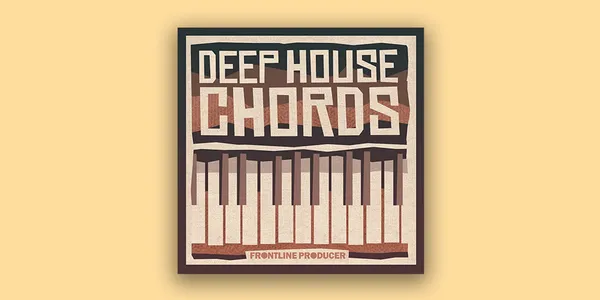
Best MIDI Chord Packs for Beat Makers (2026)
We tested the top MIDI chord packs and chord tools for voicing quality, genre accuracy, how editable they are, and whether they actually teach you harmony.
Jada Osei
Jada makes lo-fi beats, boom bap, and chill hop. She samples vinyl, builds beats on an SP-404 and in Ableton, and runs a YouTube beat-making channel with over 50K subscribers. She values vibe over perfection and believes the best sample packs sound like they were found, not manufactured.